
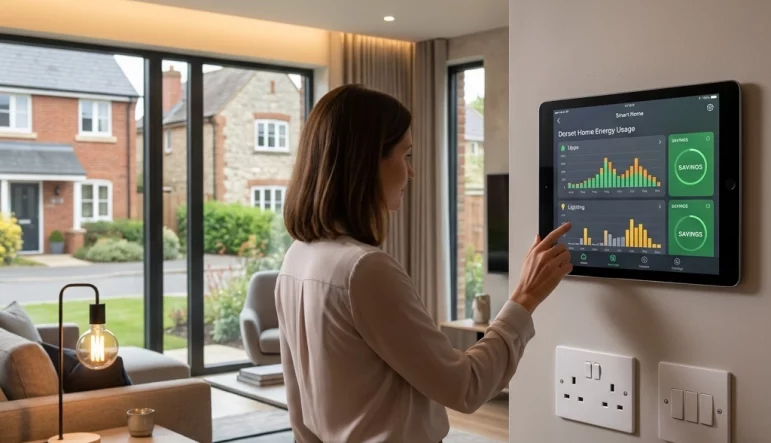
Lighting is one of those things we often take for granted: until the monthly energy bill lands on the doormat or a bulb flickers out right when you’re trying to cook dinner. For many homeowners across Dorset, Hampshire, and Wiltshire, lighting accounts for a significant chunk of the electricity bill, especially during those long, dark winter months on the coast.
At Dorset Electrical Solutions Ltd, our team sees the same lighting errors time and time again. Whether it’s an over-lit kitchen in a modern Poole apartment or a dim, shadowy lounge in a traditional Bournemouth townhouse, the mistakes are usually the same. The good news? Fixing them doesn’t just make your home look better; it can significantly reduce your energy consumption.
Here are the seven most common lighting mistakes we see and how you can fix them to start saving money today.
We’ve all heard the joke about "the big light": the central pendant in the middle of the room that everyone hates turning on. Relying on a single overhead light source is arguably the biggest mistake in interior design and energy efficiency.
When you use one central light, you’re forced to choose a high-wattage bulb to ensure the corners of the room aren't pitch black. This creates harsh shadows and an uncomfortable glare. More importantly, it’s a waste of energy. Why light up the entire lounge at full brightness when you’re just sitting in the corner reading a book?
The Fix: Layer Your Lighting
As an experienced electrician in Dorset, we recommend the "rule of three":
By using task lighting, you can switch off the high-wattage main light and use a 5W LED lamp instead. It’s better for your eyes and much better for your wallet.

It’s 2026, yet we still find halogen GU10 downlights in many homes across Bournemouth and Christchurch. If you still have these "eco-halogen" or old-fashioned incandescent bulbs, you are essentially throwing money away.
Halogens are incredibly inefficient because they turn about 90% of the energy they use into heat rather than light. If your recessed ceiling lights feel hot to the touch, they are costing you a fortune.
The Energy Saving Reality
Let’s look at a typical home in Poole. If you have ten 50W halogen downlights in your kitchen and you run them for 4 hours a day, you’re using 2kWh of electricity daily. Switching to 5W LED equivalents drops that to just 0.2kWh. Over a year, that’s a massive reduction in your carbon footprint and your bill.
If you are looking for electricians in Poole to help with a full LED conversion, we can ensure your dimmers and fittings are compatible, preventing the common "flicker" issues that come with DIY LED swaps.
There was a trend a few years ago to install as many downlights as possible. We’ve seen small bathrooms with twelve spotlights, turning a relaxing space into something resembling an operating theatre.
Over-lighting isn't just uncomfortable; it’s expensive. Every extra fitting is another point of energy consumption. Modern LED technology is powerful, meaning you usually need fewer fittings than you think to achieve a bright, airy feel.
The Fix: Quality Over Quantity
Instead of a symmetrical grid that lights the floor (which doesn't need much light), focus your light where it’s needed. Use dimmable circuits so you can control the mood. If you’re planning a renovation, our team at Dorset Electrical Solutions can help design a layout that uses the minimum number of fixtures for maximum effect.

Have you ever walked into a room and felt like something was "off"? It’s often because of mixed colour temperatures. Lighting is measured in Kelvin (K). Lower numbers (2700K–3000K) are "Warm White," while higher numbers (4000K–6000K) are "Cool White" or "Daylight."
Mixing a cool white bulb in one socket with a warm white in another creates a disjointed, messy look. It also affects how you use energy; cool light feels "brighter" to the human eye, often leading people to turn off other lights, but in a living room, it can feel clinical and cold, making the space uninviting.
Our Recommendation:
Placement is everything. A common mistake we see as an electrician in Bournemouth is downlights placed directly over a seating area. This results in "top-down" shadows on faces (not very flattering) and a constant glare on TV screens or tablets.
In the bathroom, a single light above the mirror is another classic error. It casts heavy shadows under your eyes and chin, making it difficult to shave or apply makeup.
The Fix:
For mirrors, use side-mounted wall lights to provide even illumination across the face. In living areas, bounce light off walls (wall washing) or use floor lamps to create a sense of space without the harsh overhead glare. Properly placed lights mean you don't need to "crank up" the brightness to see what you're doing.

If your lights are either "100% On" or "Off," you’re missing out on significant savings. A dimmer switch doesn't just change the mood; it reduces the flow of electricity to the bulb. Even dimming your LEDs by 20% can extend the life of the bulb and shave a little off your bill.
Furthermore, how many times have the kids left the hall or bathroom light on all night? In areas like hallways, porches, and utility rooms, motion sensors (PIRs) are a game-changer.
Smart Controls for Dorset Homes
For our clients in areas like Canford Cliffs and Branksome Park, we often install smart lighting systems. These allow you to set schedules, so your outdoor lights turn off at dawn, or your "Welcome Home" scene only activates when it’s actually dark outside.
The cheapest light is the one provided by the sun. Many homes in the South West are designed to catch the light, but we often block it with heavy curtains or cluttered windowsills.
Additionally, dirty light fixtures can lose up to 30% of their light output over time due to dust build-up. If your shades are dusty, you might find yourself turning on extra lamps just to compensate for the "dimness."
Maintenance Tips:

If you’re worried about your energy bills this year, take ten minutes to walk through your home and check the following:
Upgrading your home’s lighting is one of the fastest ways to see a return on investment. Whether you need a simple LED upgrade or a full smart-home lighting design, our team of local professionals is here to help.
As a leading emergency electrician in Bournemouth, we don't just fix faults; we help our clients build more efficient, safer homes. From Charminster to East Howe, we provide expert advice tailored to the specific needs of Dorset properties.
If you’re ready to stop making these common mistakes and start saving on your energy bills, get in touch with us today for a professional lighting consultation.
Thanks – The team at Dorset Electrical Solutions Ltd