
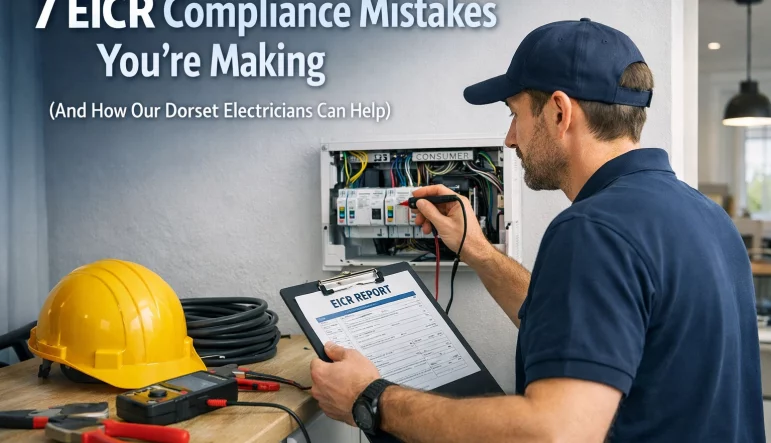
For landlords and property owners across Dorset, keeping up with electrical safety isn't just a good idea: it’s a legal necessity. Since the Electrical Safety Standards in the Private Rented Sector Regulations came into force, the Electrical Installation Condition Report (EICR) has become the gold standard for proving your property is safe. Whether you’re managing a flat in Bournemouth, a townhouse in Poole, or a cottage in Ringwood, an EICR ensures your wiring, sockets, and consumer units are up to scratch.
However, we often see the same mistakes being made during inspections. These errors don't just lead to a "Unsatisfactory" result; they can actually put your tenants at risk and invalidate your insurance. As a trusted electrician dorset residents rely on, we’ve put together this guide to the seven most common EICR compliance mistakes and how to fix them before they become a headache.
One of the most frequent causes of EICR failure is overloaded circuits. In older properties in areas like Ferndown or Branksome Park, electrical systems were never designed to handle the sheer number of appliances we use today. When you add high-draw items: like a new power shower, a tumble dryer, or a modern kitchen setup: without checking the circuit capacity, you’re asking for trouble.
This is particularly relevant now with the rise of EV charger installation. Many homeowners try to "daisy-chain" high-power equipment or use improper extensions. An EV charger requires its own dedicated circuit and proper protection. If our team finds a circuit carrying more current than it was designed for, it’s flagged as a fire hazard immediately. Upgrading your infrastructure to handle modern demands is the only safe way forward.
Residual Current Devices (RCDs) are the unsung heroes of electrical safety. They are designed to trip the power in milliseconds if they detect a fault, preventing fatal electric shocks. Under current BS 7671 (18th Edition) regulations, RCD protection is mandatory for almost all circuits in a domestic property, especially in high-risk zones like bathrooms and kitchens.
If your property still relies on old-fashioned rewirable fuses or older circuit breakers without RCD protection, it will almost certainly fail an EICR. At Dorset Electrical Solutions, we often find that while the main lights might be fine, the sockets: especially those that could be used for outdoor equipment: lack this vital safety feature.

Earthing and bonding are the "invisible" parts of your electrical system, but they are absolutely critical for compliance. Earthing provides a safe path for fault current to flow to the ground, while bonding connects the electrical system to other metalwork, like gas and water pipes.
In many older homes across Bournemouth and Poole, the main earthing conductor is either too small or has become loose or corroded over time. If the earthing is insufficient, a fault could turn your metal taps or radiators live. During an EICR, our electricians check these connections thoroughly. If they aren't up to current standards, it's a major compliance gap that needs immediate remedial work.
Your consumer unit (the fuse board) is the heart of your home's electricity. An outdated unit is one of the most common reasons for a "Code C2" (Potentially Dangerous) or "Code C1" (Danger Present) on a report. We frequently see units with wooden backings, plastic casings that don't meet fire-rating standards, or signs of heat damage inside.
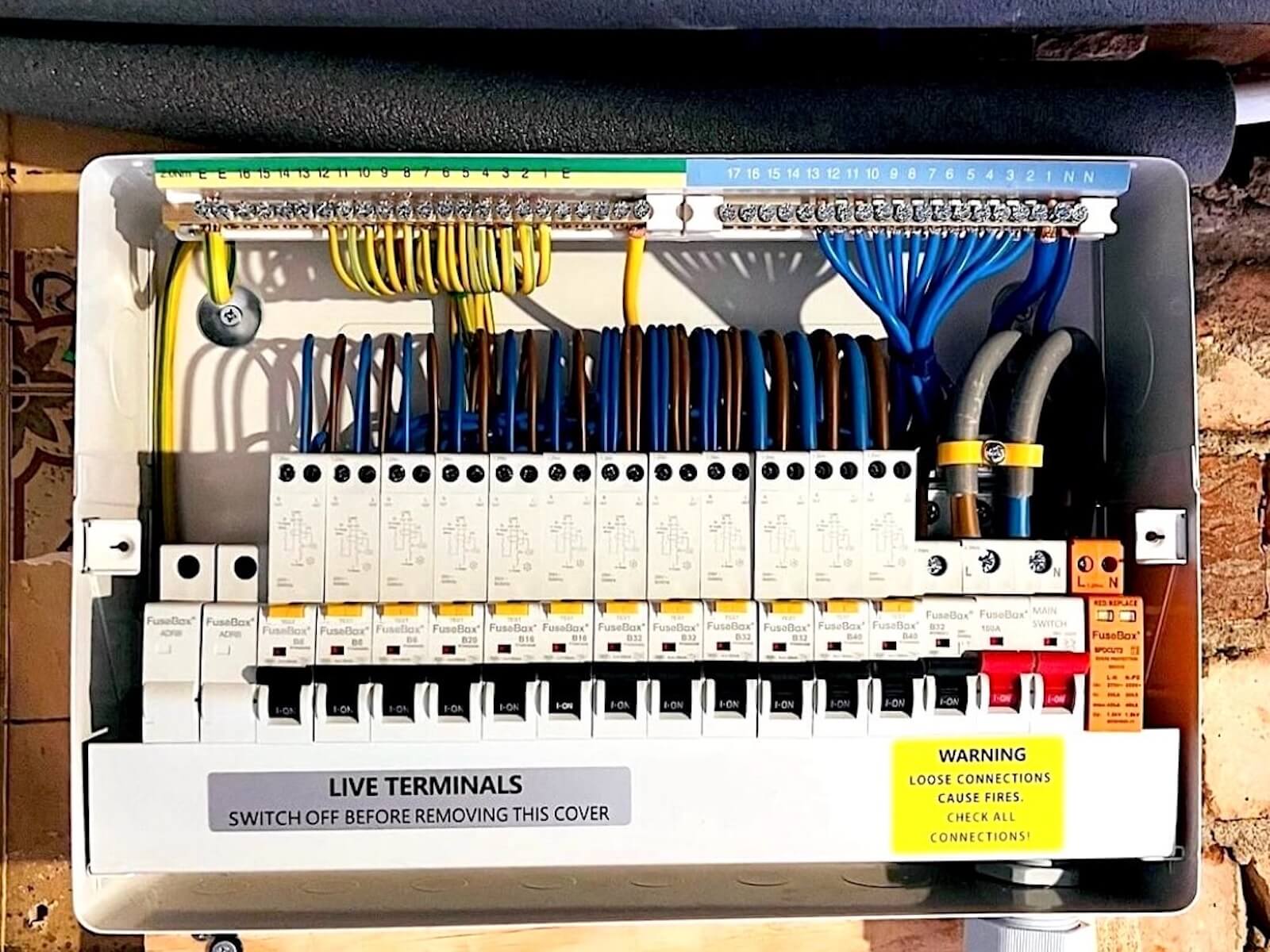
As shown in the image above, a modern consumer unit installation should be neatly organised, clearly labelled, and fitted with the correct RCDs and Surge Protection Devices (SPDs). Upgrading your consumer unit is often the most cost-effective way to bring a property in Dorset up to modern safety standards in one go.
Some landlords make the mistake of hiring "drive-by" inspectors who only run a few meter tests and leave. A proper EICR requires a comprehensive visual assessment. This includes checking for:
Skipping the visual side of things means missing hazards that a meter might not catch. Our team takes the time to look behind the scenes, ensuring that the installation is physically sound as well as electrically functional.
We’ve all seen it: the "DIY special." Whether it’s a socket added in a garage or some creative wiring for garden lights, non-professional alterations are a nightmare for EICR compliance. Even if the work looks neat on the surface, it often fails because of incorrect cable sizes, poor joins, or a lack of proper grounding.
In Dorset, we see many properties where owners have tried to save a few pounds by doing the work themselves. However, the cost of fixing these mistakes to pass an EICR usually far outweighs the initial "savings." If you're looking to add value to your property: perhaps through an EV charger installation or updated lighting: always use a qualified professional to ensure it meets the 18th Edition regulations.
Insulation resistance testing checks that the "plastic" coating around your wires hasn't perished or been damaged. Over time, heat, age, and even rodents can degrade cable insulation. If the insulation breaks down, electricity can "leak," leading to short circuits, fires, or shocks.
Some cut-price inspectors skip this step because it can be time-consuming (it requires disconnecting sensitive electronics). However, omitting this test leaves a massive blind spot in your property's safety profile. A genuine EICR will always include these readings to prove the cabling hidden inside your walls is still fit for purpose.
While an EICR focuses on the electrical safety of your property, we often find that landlords in Dorset face another major compliance hurdle: damp and mould. Under the Homes (Fitness for Human Habitation) Act, landlords must ensure their properties are free from these issues.
This is where a PIV unit (Positive Input Ventilation) becomes a game-changer. These systems are professionally installed in loft spaces to circulate fresh, filtered air throughout the home, pushing out moist, stagnant air that causes condensation.
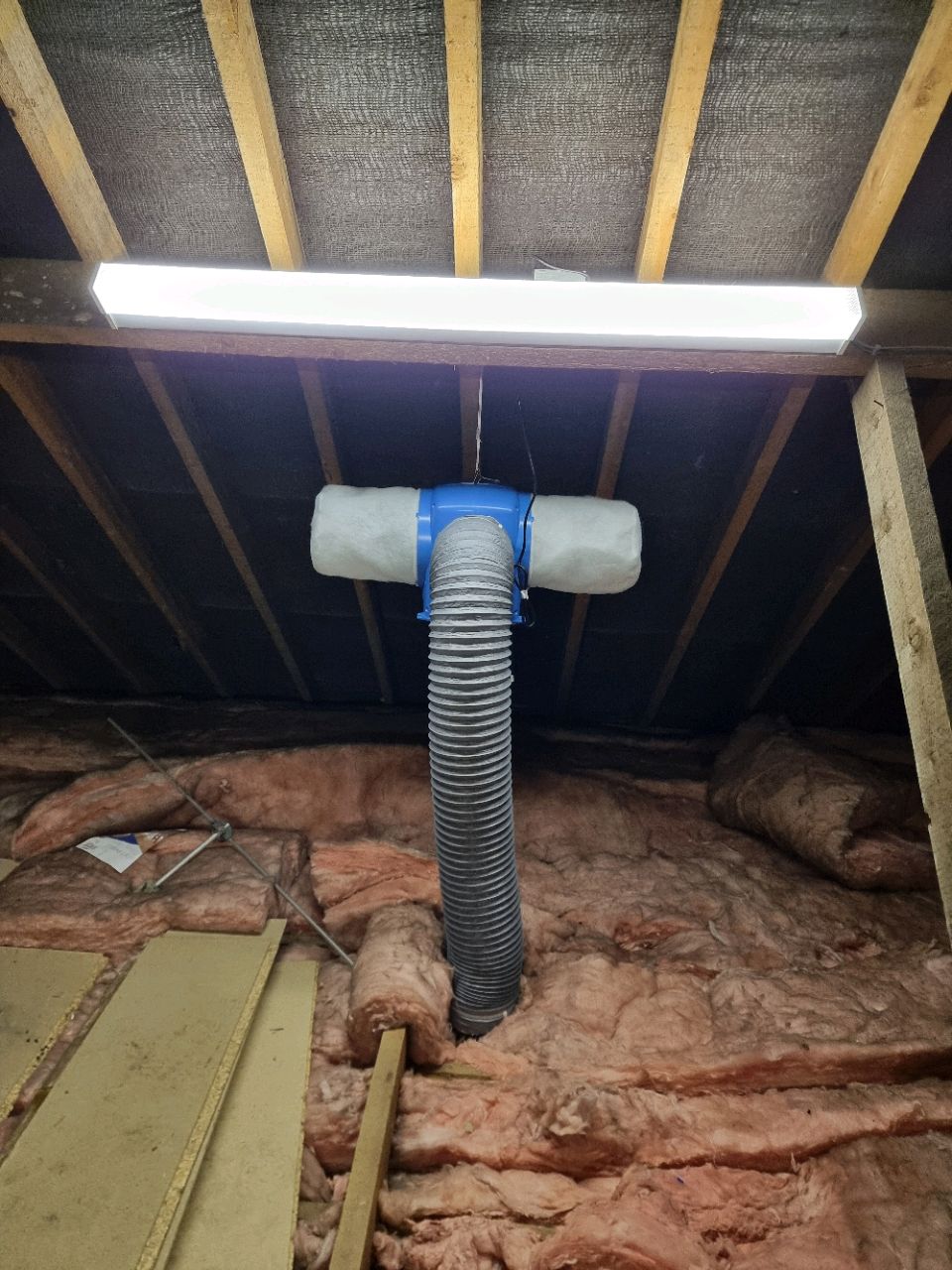
Installing a PIV system not only protects the health of your tenants but also protects the fabric of your building. When we carry out electrical upgrades or EICR remedial work in Poole or Ringwood, we often recommend looking at ventilation as part of a holistic approach to property maintenance.
Navigating EICR regulations can feel like a minefield, but it doesn't have to be. Our team of qualified electricians covers the entire region, providing reliable, matter-of-fact service to landlords and homeowners alike.
We don't just find the problems; we provide the solutions. From consumer unit upgrades to EV charger installation, we ensure your property is safe, compliant, and future-proofed.
Our services include:
Don't wait until your insurance is void or a fault occurs. Getting your EICR right the first time saves money, stress, and, most importantly, lives. If you’re unsure about the state of your property’s electrics, get in touch with a local electrician dorset expert today.
For more information on our recent projects and local service areas, you can explore our page sitemap or check out our dedicated pages for electricians in Bearwood and Canford Cliffs.