
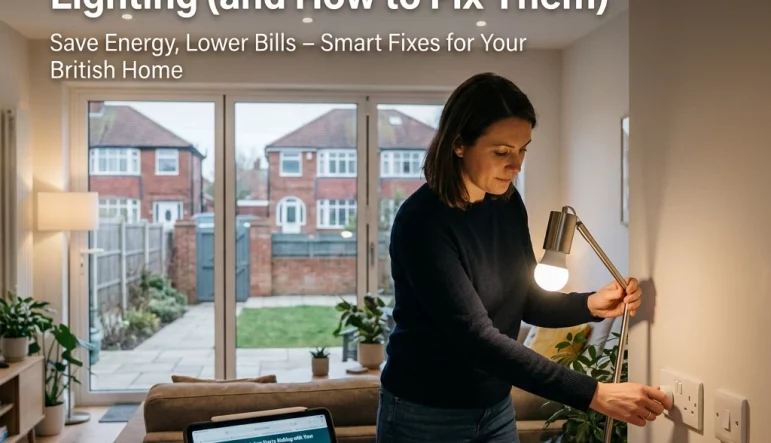
Lighting accounts for a significant portion of the average UK household's electricity bill. In Dorset and the surrounding counties of Hampshire and Wiltshire, many homeowners are paying more than necessary due to outdated habits and inefficient systems. We often see properties where simple adjustments could drastically reduce monthly overheads.
As a professional team of electricians in Poole and Bournemouth, we help our clients identify where energy is leaking from their homes. Improving your lighting efficiency is not just about saving money; it is also about reducing your carbon footprint and improving the functionality of your living spaces.
Below are seven common energy-wasting mistakes we encounter during our daily call-outs and how our team suggests you fix them.
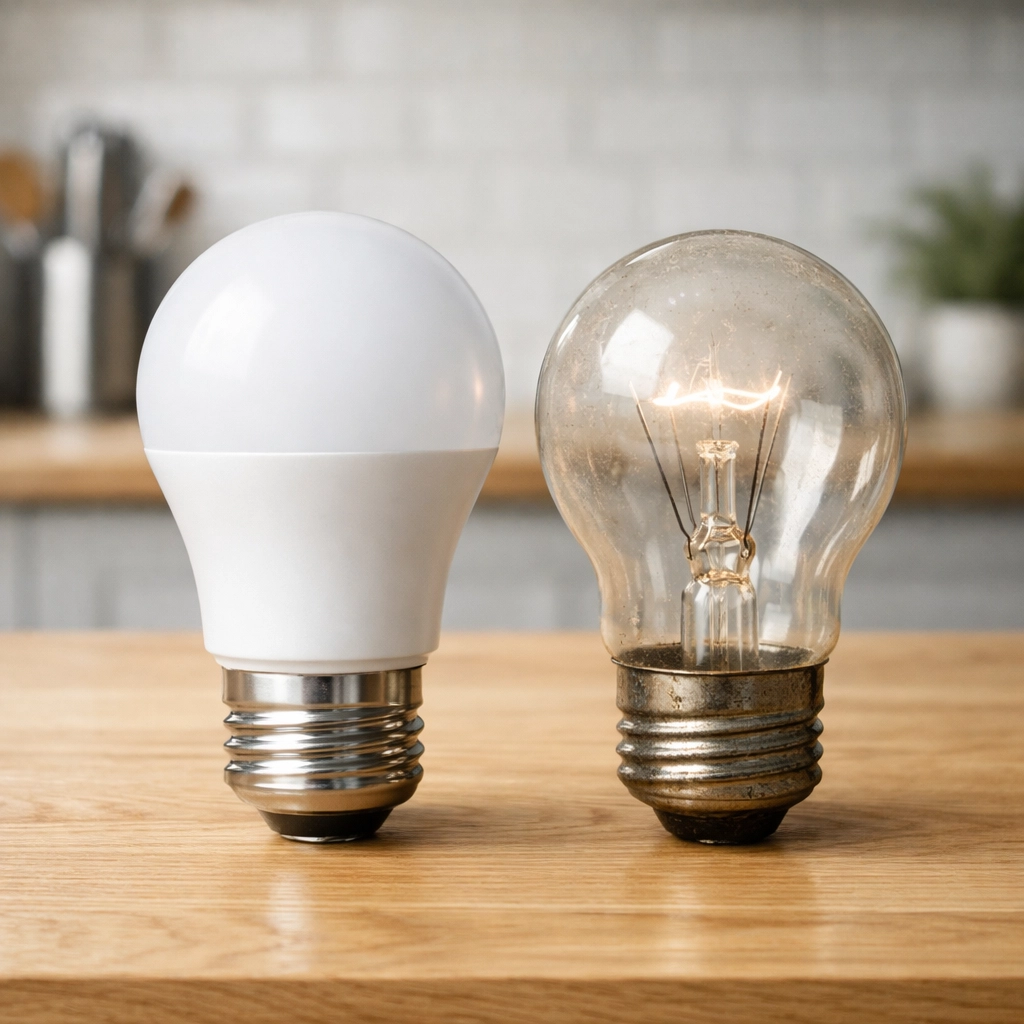
Many homes in Bournemouth still use halogen or old-style incandescent bulbs. While these bulbs are cheaper to buy initially, they are incredibly inefficient. Incandescent bulbs lose about 90% of their energy as heat rather than light. This is a primary cause of high energy bills.
The Fix:
Replace every bulb in your home with high-quality LED alternatives. Modern LEDs use up to 80% less energy than traditional bulbs. For example, a 60W incandescent bulb can be replaced by a 9W LED, providing the same level of brightness.
Our team often carries out full-house LED conversions for our clients. This switch pays for itself in energy savings within the first year. If you are looking for an electrician in Dorset to audit your current lighting, we can provide a detailed breakdown of potential savings.
It sounds simple, but leaving lights on when you leave a room is a major contributor to energy waste. This is particularly common in larger homes or properties with children. Even low-energy bulbs cost money when left running for hours in an empty hallway or kitchen.
The Fix:
The most effective solution is a combination of habit and technology. For areas like hallways, bathrooms, or garages, we recommend installing PIR (Passive Infrared) sensors. These sensors detect movement and automatically turn the lights off when the room is empty.
For homeowners in Bournemouth and Poole, smart lighting systems allow you to check which lights are on via your smartphone. You can turn off the kitchen lights from your office or set schedules so lights only operate when needed. Check out our gallery for examples of smart control installations we have completed recently.
We frequently visit properties where a single high-wattage central light is used to illuminate an entire room. This often leads to over-lighting certain areas while leaving others in shadow. Using more light than is required for a specific task is a direct waste of electricity.
The Fix:
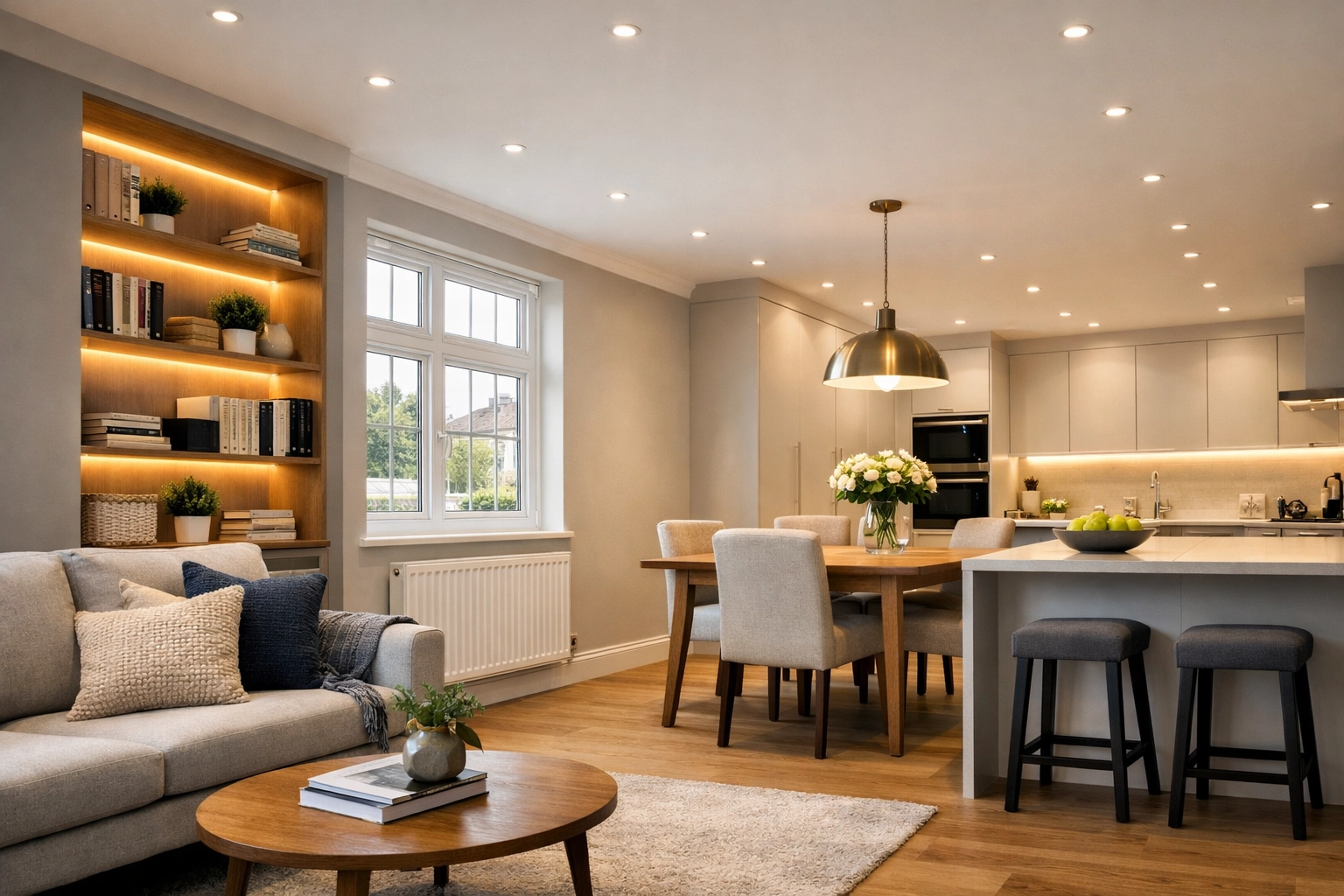
Adopt a "layered" approach to lighting. This involves dividing a room into zones:
By using task lighting: such as under-cabinet LEDs in the kitchen: you can turn off the main overhead lights while still having excellent visibility where you need it. This targeted approach is a core part of the electrical design services we offer at Dorset Electrical Solutions Ltd.
Running your lights at 100% brightness all the time is rarely necessary, especially in the evenings. Most people do not realise that standard on/off switches offer no flexibility in energy consumption. If the light is on, it is drawing full power.
The Fix:
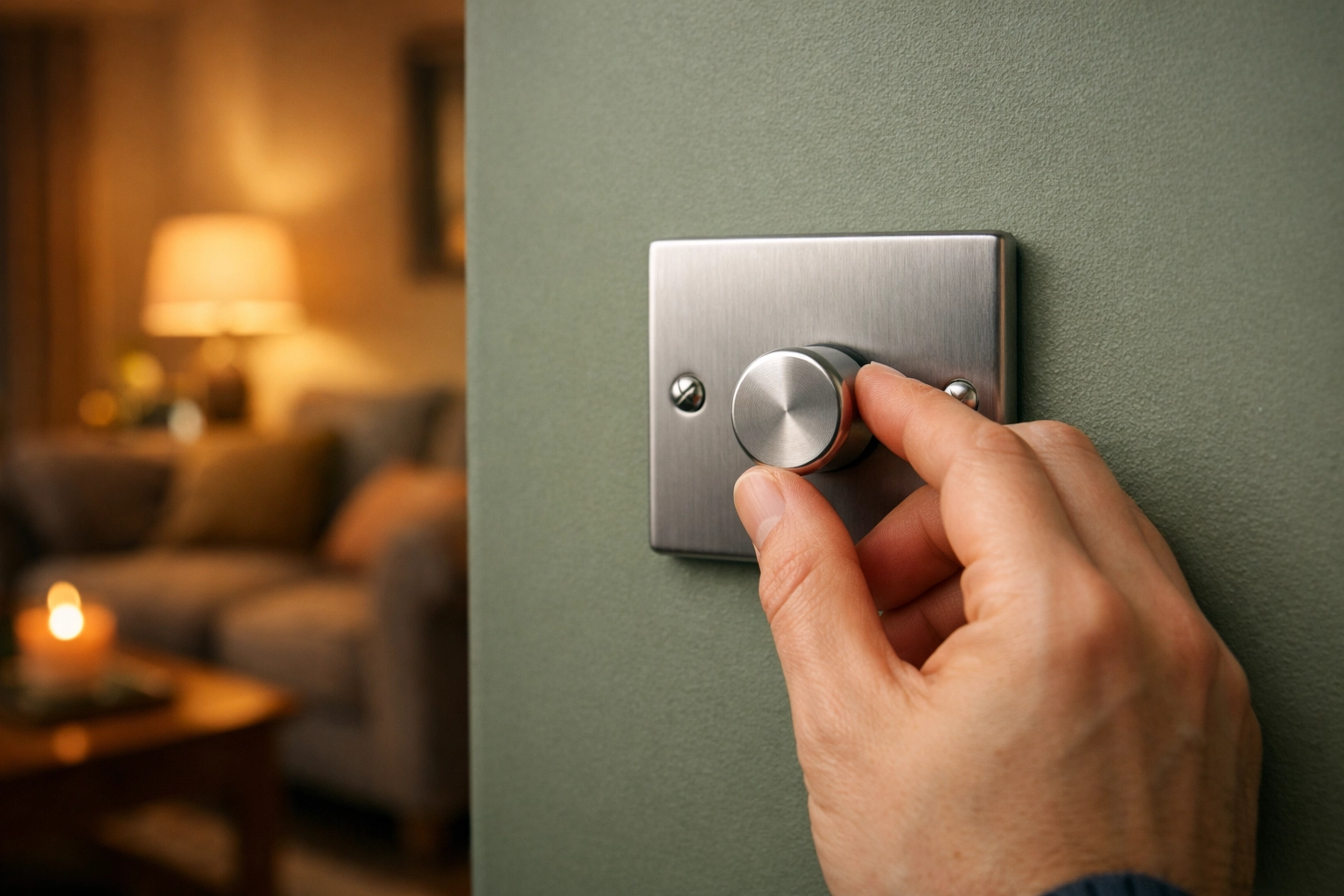
Install modern LED-compatible dimmer switches. Dimmers allow you to reduce the voltage sent to the bulb, which directly reduces energy consumption and extends the life of your bulbs.
When we work as an electrician in Bournemouth, we ensure that dimmers are correctly matched to the LED drivers to prevent flickering. This small change allows you to create a better atmosphere while keeping your meter from spinning unnecessarily fast.
A mistake we see in many DIY lighting projects is choosing bulbs based on wattage rather than lumens and colour temperature. Homeowners often buy higher-wattage bulbs than necessary because they are trying to achieve a certain "look" or brightness level.
The Fix:
Learn the difference between Lumens (brightness) and Watts (energy used).
Properly selected colour temperatures make a room feel brighter and more usable, often allowing you to use fewer fixtures overall.
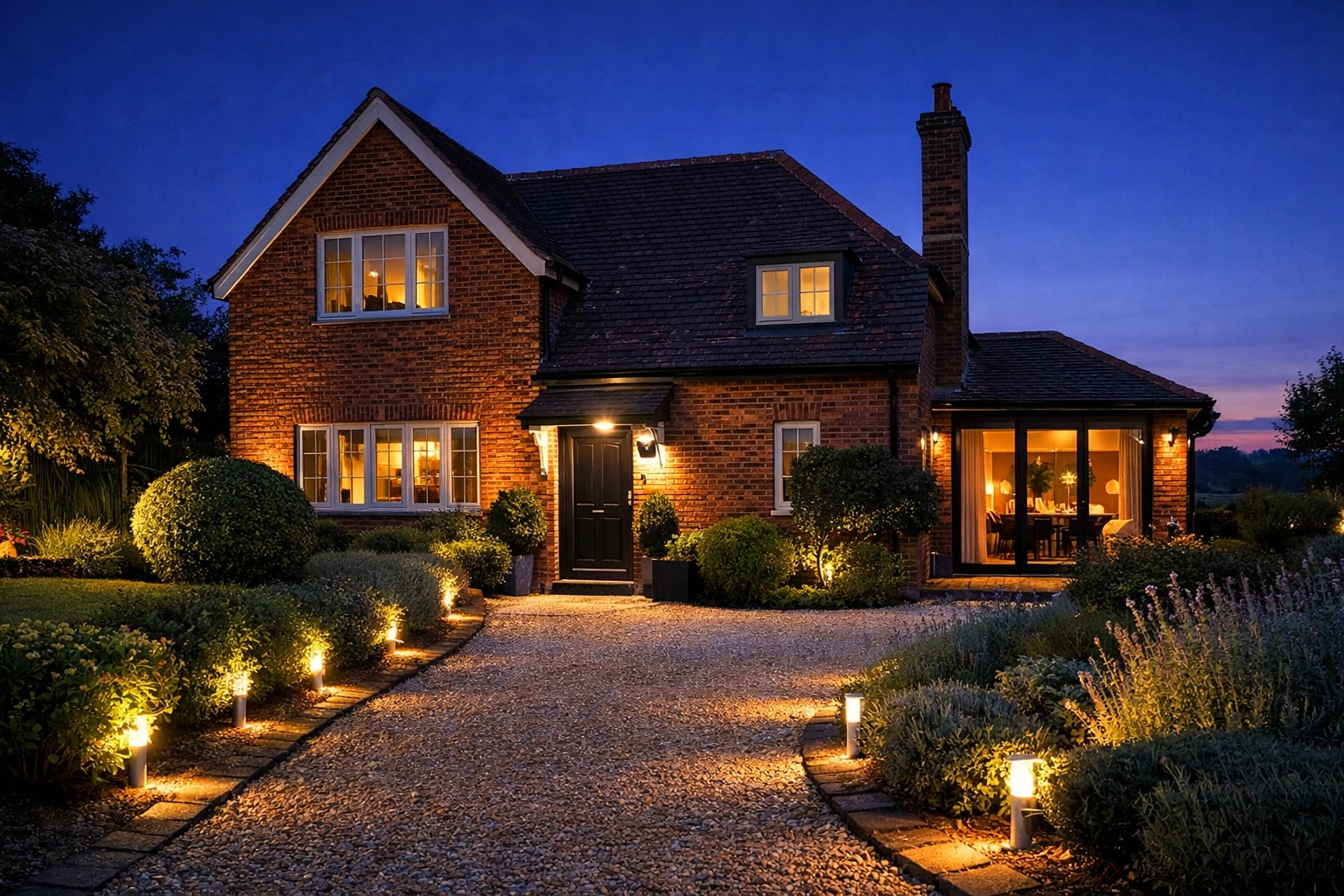
Security and aesthetic outdoor lighting are common in Dorset and Wiltshire. However, many homeowners leave these lights on all night or use high-power floodlights that are not properly aimed. An unmonitored 100W outdoor light running 12 hours a night adds up quickly.
The Fix:
Switch all outdoor fixtures to LED and integrate photocells or timers. A photocell ensures the light only operates when it is actually dark (dusk to dawn). Even better, use motion-activated security lights so they only draw power when a person or vehicle is detected.
As an emergency electrician in Bournemouth, we often see outdoor lighting that has been poorly installed, leading to water ingress and electrical faults. Professional installation ensures your security lighting is both energy-efficient and safe.
Some light fixtures are inherently inefficient due to their design. For example, fixtures with heavy or dark shades require higher-wattage bulbs to push light through the material. Similarly, old recessed "can" lights often leak heat into the attic, forcing your heating system to work harder.
The Fix:
Choose fixtures that allow for maximum light distribution. If you are using recessed lighting, ensure they are "IC-rated" (Insulation Contact), which allows them to be covered by insulation, preventing heat loss from your rooms.
At Dorset Electrical Solutions Ltd, we provide advice on fixture selection as part of our contracting services. Selecting the right hardware is just as important as selecting the right bulb.
While it is tempting to attempt lighting upgrades yourself, electrical work carries inherent risks. In the UK, certain electrical works must comply with Part P of the Building Regulations. Our team is fully qualified to ensure that every installation we perform is safe, compliant, and optimised for energy efficiency.
Incorrectly installed LEDs can flicker or burn out prematurely if the underlying wiring or dimming modules are incompatible. By hiring a professional electrician in Poole or Bournemouth, you ensure that your investment in energy-saving technology actually delivers the promised results.
We handle everything from simple bulb replacements to full-scale smart home lighting designs. Whether you are in a modern apartment in Bournemouth or a period property in rural Wiltshire, we have the experience to modernize your electrical system.
To start saving today, we recommend the following checklist:
If you are concerned about your energy usage or need a professional to look at your current setup, our team is available to help. We provide reliable, professional service across the South West.
You can find more information about our services and previous projects on our main website. We are committed to helping our clients achieve a safer, more efficient home through better electrical practices.
Thanks – The team at Dorset Electrical Solutions Ltd