
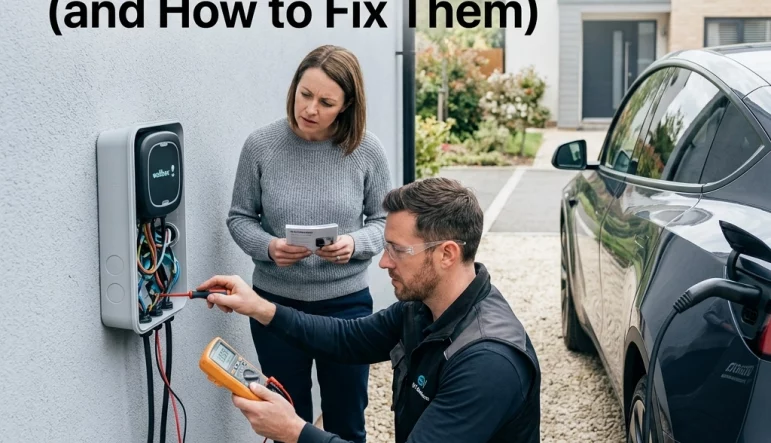
EV charger installation involves specific electrical requirements and compliance with BS 7671 regulations. Property owners in Dorset, Bournemouth, and Poole frequently encounter technical issues due to inadequate planning or unqualified labor. Dorset Electrical Solutions handles residential and commercial installations across Ferndown and Ringwood, ensuring all hardware meets current safety standards.
Many users select a charger without evaluating the existing electrical supply or the vehicle's onboard charging limit. A common error is installing a 22kW three-phase charger in a standard residential property that only supports single-phase power. Most homes in Bournemouth and Poole operate on a single-phase supply, which caps the charging output at 7kW. Installing a charger that exceeds the property’s capacity leads to hardware underperformance or requires expensive utility upgrades.
To fix this, confirm the phases available at your property. Our team conducts site surveys to verify whether a 3.6kW or 7kW unit is appropriate for your current infrastructure. Selecting a charger that matches the vehicle's maximum AC charging rate prevents overspending on redundant technology.
Existing consumer units in older Dorset properties often lack the space or the specific protection required for EV circuits. EV chargers require a dedicated circuit and high-sensitivity protection. A standard RCD may not be sufficient. Modern installations require Type A or Type B RCDs to handle DC leakage, which is a common byproduct of EV charging. Failure to upgrade the consumer unit can result in nuisance tripping or electrical fires.
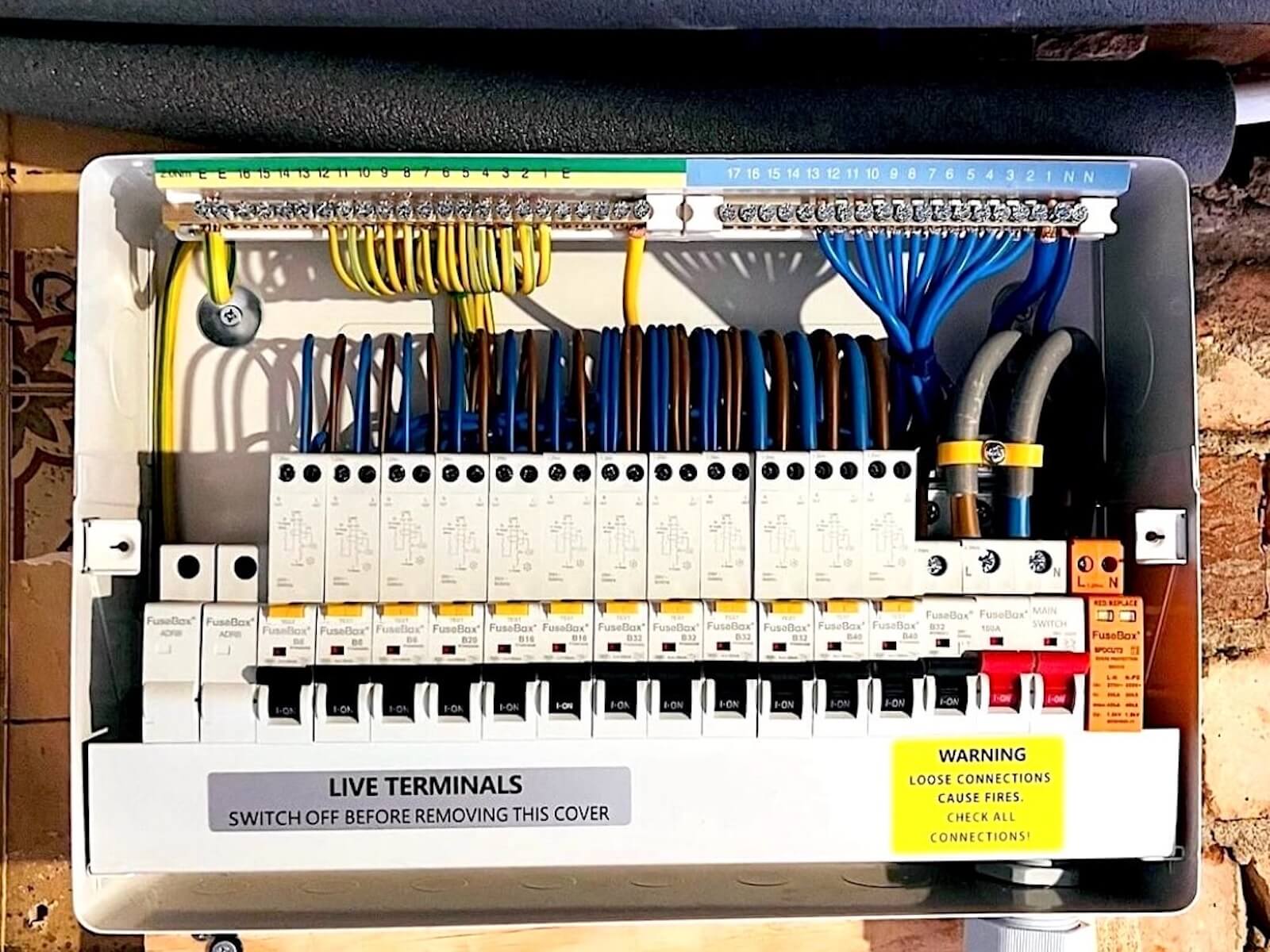
The fix involves a full assessment of the distribution board. If the current board is full or outdated, we install a small secondary consumer unit specifically for the EV charger. This ensures the car charging circuit remains independent of the household lighting and power rings. We provide updated EICR documentation to confirm the new circuit meets all 18th Edition Amendment 2 requirements.
Standard electrical domestic circuits are designed with diversity in mind, assuming not all appliances run at maximum power simultaneously. An EV charger is a continuous load, drawing high amperage for several hours. In areas like Ferndown and Ringwood, where properties may have electric heating or high-demand appliances, adding an EV charger without a load calculation can blow the main service fuse.
Fixing this requires a professional load assessment. We calculate the total demand of the property and, where necessary, install chargers with active load balancing. This technology monitors the total house consumption and automatically reduces the power to the car if the house demand nears the limit of the main fuse. This prevents the main 60A or 80A service fuse from failing during peak evening hours.

Installers often overlook the logistics of the charging cable or the environmental impact on the unit. Placing a charger too far from the vehicle inlet results in tension on the cable and connector. In coastal areas like Poole, salt spray and moisture can accelerate the degradation of terminals if the unit is not rated for high-exposure environments. Improperly mounted units may also create trip hazards across public footpaths or private driveways.
To fix this, plan the installation based on where the vehicle is most frequently parked. We recommend a location that allows the cable to reach the charging port without being under strain. Use of high-quality, weather-rated mounting posts or wall brackets is essential. For properties with damp or condensation issues in garages, we often integrate PIV unit installations to manage air quality and protect electrical components from corrosion.
UK regulations regarding earthing for EV chargers are strict. Most UK homes use a PME (Protective Multiple Earthing) system. If the neutral wire in the street fails (a PEN fault), the chassis of the car could become live, creating a significant shock risk. Older installation methods required driving a copper earth rod into the ground, which is often difficult in paved driveways in urban Bournemouth.
The fix is to use EV chargers with built-in PEN fault protection. This technology monitors the voltage and disconnects the charger if it detects a fault in the supply network, eliminating the need for an external earth rod. Our team ensures that every installation in Dorset utilizes compliant PEN fault detection hardware to maintain site safety.
Attempting a DIY installation or hiring a general handyman leads to non-compliance and voided warranties. EV charger installation is a specialized task requiring an electrician dorset with specific certifications. Unqualified individuals often use incorrect cable sizes, leading to voltage drops and overheating. They also frequently fail to notify the Distribution Network Operator (DNO), which is a legal requirement for all new EV charge point installations.
Fixing this mistake involves hiring a certified professional. Dorset Electrical Solutions handles all DNO notifications on behalf of the client. We use correct SWA (Steel Wire Armoured) or EV-specific cabling to ensure mechanical protection and thermal stability. Our team provides the necessary Part P building control notifications and electrical installation certificates upon completion.

Many owners install "dumb" chargers that lack internet connectivity. These units cannot take advantage of off-peak energy tariffs, which are significantly cheaper. Furthermore, current UK regulations require new chargers to have "smart" functionality, including the ability to delay charging during peak grid demand. Installing a non-smart unit may result in higher long-term energy costs and a lack of integration with solar PV systems.

The fix is to install a smart, Wi-Fi or GPRS-enabled charger. This allows you to schedule charging via an app, ensuring the vehicle charges at night when rates are lower. For clients in Dorset with solar arrays, we install units that can divert excess solar energy directly into the vehicle, maximizing self-consumption. We also ensure the Wi-Fi signal reaches the installation point, often installing range extenders if the charger is mounted far from the router.
Compliance with the latest regulations ensures the longevity of your hardware and the safety of your property. Whether you are in a flat in Bournemouth or a detached home in Ringwood, the electrical infrastructure must be verified before any hardware is mounted.
Our team is currently completing several EV charger installation projects across the county. Photos of these technical setups will be available in our gallery soon. Professional oversight prevents the seven mistakes listed above and guarantees a reliable charging solution for years to come.
Thanks.