
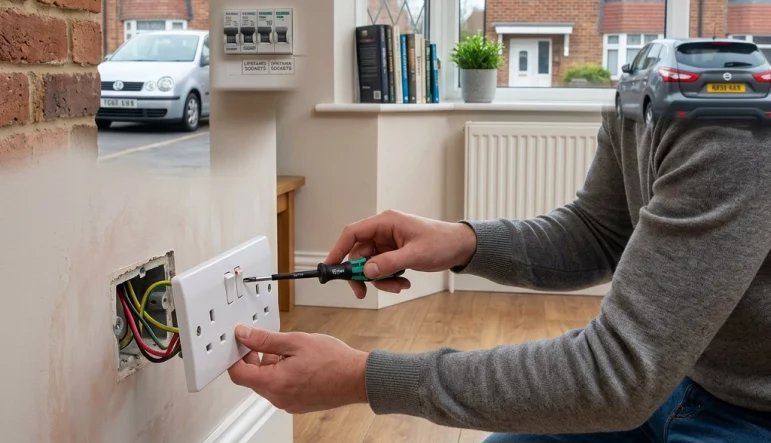
We know the temptation. You’ve spent the weekend scrolling through home improvement ideas, and you’re ready to modernise your home in Bournemouth or Poole. Maybe you want to swap out a light fitting or add a new socket in the garage. While DIY is great for painting or tiling, electrical work is a different beast entirely.
Our team at Dorset Electrical Solutions Ltd often visits homes across Dorset, Hampshire, and Wiltshire to fix "quick DIY jobs" that have turned into dangerous hazards. Minor errors in wiring can lead to fires, shocks, or expensive remedial work. If you are planning some home improvements, here are seven common mistakes we see and exactly how you should handle them to keep your family safe.
One of the most frequent errors we encounter as an electrician in Dorset is the use of incorrect cable sizes. Every circuit in your home is designed to carry a specific amount of current. In the UK, we typically use 1.5mm² for lighting circuits and 2.5mm² for socket rings.
The Mistake: Homeowners often use whatever cable they have lying around. Using a thin cable for a high-load appliance like a power shower or an oven is a recipe for disaster. The cable will overheat, the insulation will melt, and a fire can start inside your walls.
The Fix: Always match the cable to the circuit’s amperage. If you are unsure about the load requirements for a specific appliance, it is time to call in the professionals. We ensure all installations meet BS 7671 standards. You can see examples of our compliant work on our gallery page.

In the age of smart homes and endless gadgets, we are demanding more from our electrical systems than ever before. This is particularly true in older properties in areas like Charminster or Boscombe where the original wiring wasn't designed for modern life.
The Mistake: Using multiple "daisy-chained" extension leads or plugging high-wattage appliances (like kettles and heaters) into a single multi-way adapter. This draws too much current through a single point, causing heat build-up.
The Fix: We recommend installing additional permanent sockets if you find yourself relying on extension leads. Distribute your high-power appliances across different circuits. If your consumer unit frequently trips, it is a sign your system is struggling. Our electricians in Charminster can perform a load assessment to see if you need a circuit upgrade.
It sounds obvious, but you would be surprised how often people forget to properly turn off the power before starting work.
The Mistake: Simply flipping the wall switch off is not enough. The "live" wire still carries a current to the fixture. Working on a live circuit is the leading cause of electrical shocks for DIYers.
The Fix: Always turn off the power at the main consumer unit (fuse box). Don’t just guess which breaker is which. Use a certified non-contact voltage tester to verify the wires are "dead" before you touch them. If you are dealing with an emergency because a DIY attempt went wrong, our emergency electrician Bournemouth service is available to help.
Modern electrical components require precision. We often find that DIYers either strip too much insulation off a wire or not enough.
The Mistake: If you strip too much, you leave exposed "live" copper which can touch other wires or the metal backbox, causing a short circuit. If you don't strip enough, the terminal screw might grip the plastic insulation instead of the copper, creating a high-resistance connection that generates heat.
The Fix: Ensure only the necessary amount of copper is exposed to fit into the terminal. Use a proper wire stripping tool rather than a kitchen knife. Most importantly, ensure the terminal screws are tight. A loose wire is a fire hazard. We check every connection with calibrated tools during our inspections.

Sometimes you need to join two cables together, often during a renovation or an extension.
The Mistake: Using a standard screw-terminal junction box and then burying it under floorboards, behind plasterboard, or under layers of insulation. Over time, screws can loosen due to thermal expansion. If that box is buried, you won't know it’s arcing until you smell smoke.
The Fix: All electrical connections must remain accessible for inspection unless they are "maintenance-free" joints (like crimped or Wago-style connectors). If you are renovating a property in Canford Heath, make sure any joints are housed in a proper enclosure and remain reachable.
RCDs (Residual Current Devices) are life-savers. They are designed to trip the power in milliseconds if they detect a leak of current, such as when someone touches a live wire.
The Mistake: Many older homes in Dorset still have "re-wirable" fuses or older circuit breakers that do not provide RCD protection. Homeowners often add new sockets to these old circuits without installing the necessary protection.
The Fix: If you are adding any new wiring, the circuit must be RCD protected to comply with current UK building regulations. This is especially critical for outdoor electrics or sockets in kitchens and bathrooms. Our electricians in Poole can upgrade your old fuse board to a modern, RCD-protected consumer unit.

Earthing is the safety system that directs electricity into the ground if there is a fault, preventing metal casings from becoming live.
The Mistake: Forgetting to connect the earth wire (the green and yellow one) or failing to ensure that metal pipes (gas and water) are properly bonded to the main earth terminal. Without proper earthing, your circuit breakers might not trip during a fault, leaving you at risk of electrocution.
The Fix: Never "snip off" the earth wire because you think it isn't needed. Every circuit needs a continuous earth path. If you live in an older property, we highly recommend an Electrical Installation Condition Report (EICR) to ensure your earthing is up to modern safety standards.
While we encourage homeowners to understand how their homes work, electricity is not the place for trial and error. If you are in doubt, the safest option is to call a qualified professional.
Our team provides comprehensive services across the region, from Bear Cross to Branksome Park. Whether you need a simple socket replacement or a full house rewire, we bring the expertise and certification required to keep your home legal and safe.
Working with a registered electrician in Bournemouth means you get a certificate of compliance for the work, which is essential if you ever decide to sell your home. DIY electrical work without a certificate can often lead to issues during the conveyancing process.

We pride ourselves on providing a friendly, casual, but entirely professional service to our local community. If you have a project in mind, or if you've started a DIY job and realized it's more complex than it looked, don't worry: we have seen it all before.
You can find more information about our local services on our page sitemap or contact us directly via our website.
Thanks – The team at Dorset Electrical Solutions Ltd