
Cable diversions, disconnections and service alterations, surveyed, priced and programmed around your project rather than the network operator’s queue.

An existing cable under the footprint of a new building, a service that needs to move for an extension, a supply to be removed before demolition: these small jobs can hold up a whole project if they sit in the network operator’s queue. As a NERS-accredited Independent Connection Provider, Dorset Electrical Solutions can carry out the contestable part of diversions, disconnections and service alterations and coordinate the rest with the network operator.
We survey the site, obtain the network operator’s records, confirm what can be contested, and give you a programme and a fixed price for our part of the work, with the network operator’s charges shown separately.
Some elements of diversion work must be done by the network operator on its own assets. We tell you which is which at the survey and manage both, so you are not chasing two organisations.
A cable or service running under the new footprint.
Supplies disconnected and confirmed dead before the site is cleared.
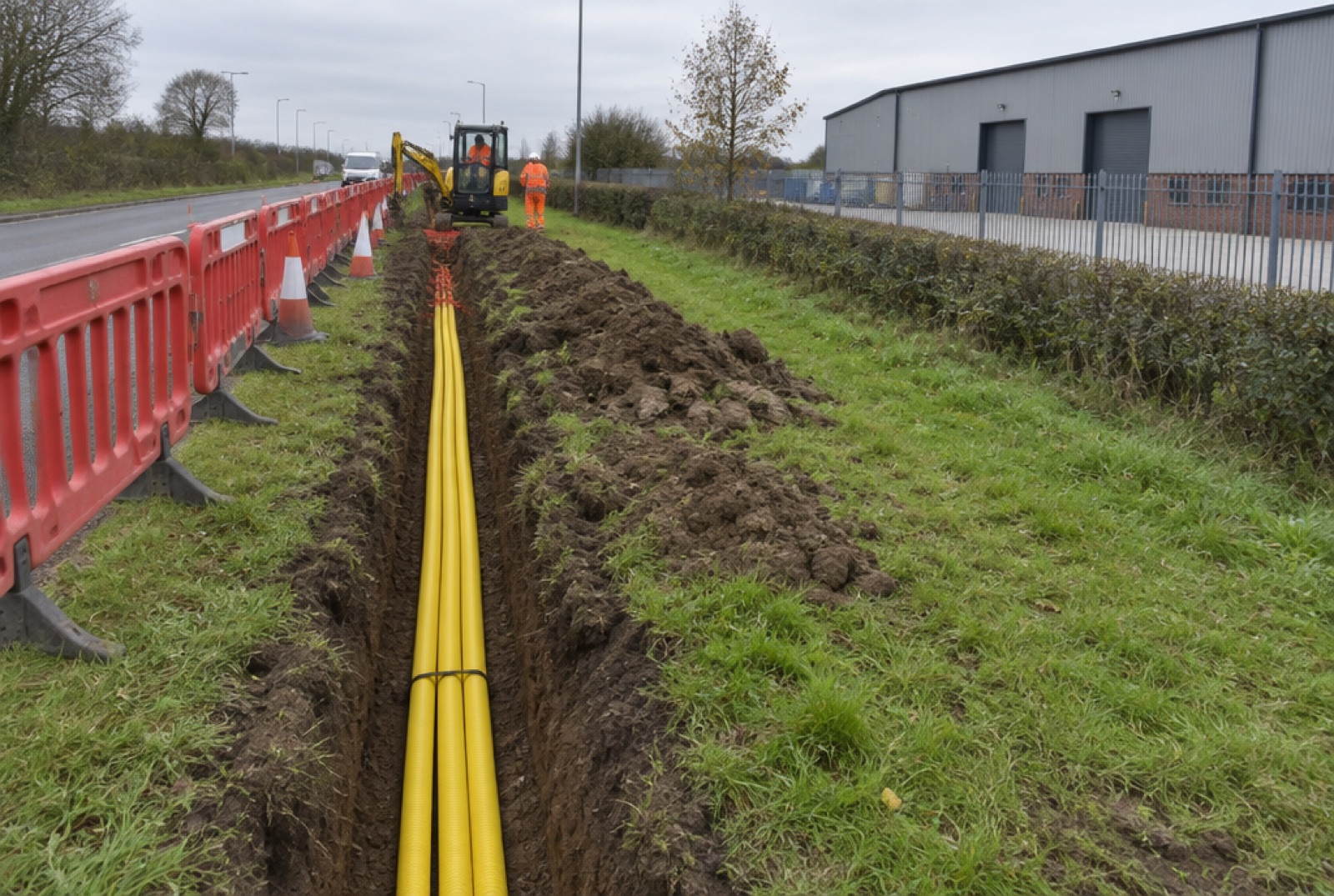
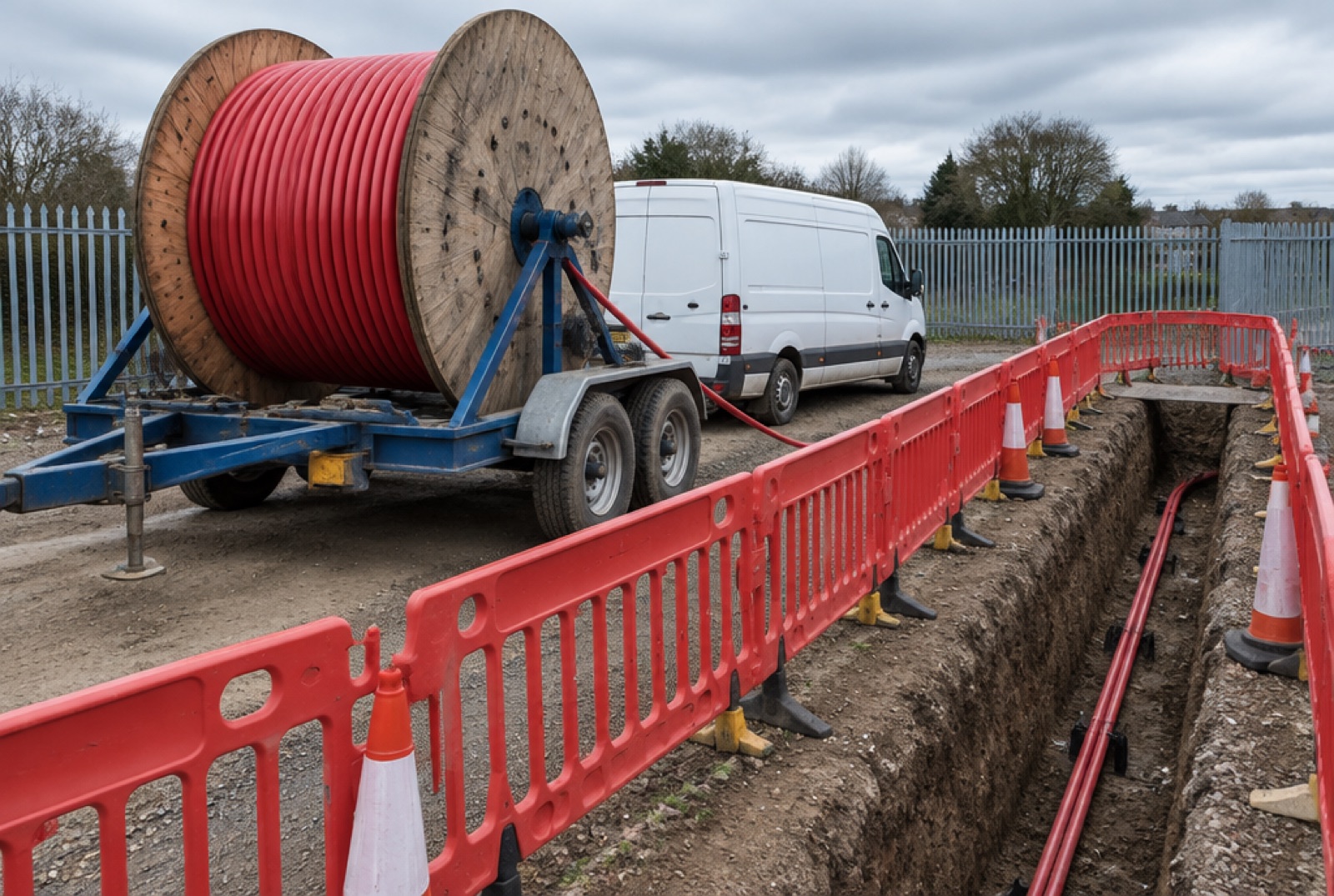
Mains cables re-routed for site entrances and highway works.
Cables clashing with new drainage runs, tanks or foundations.
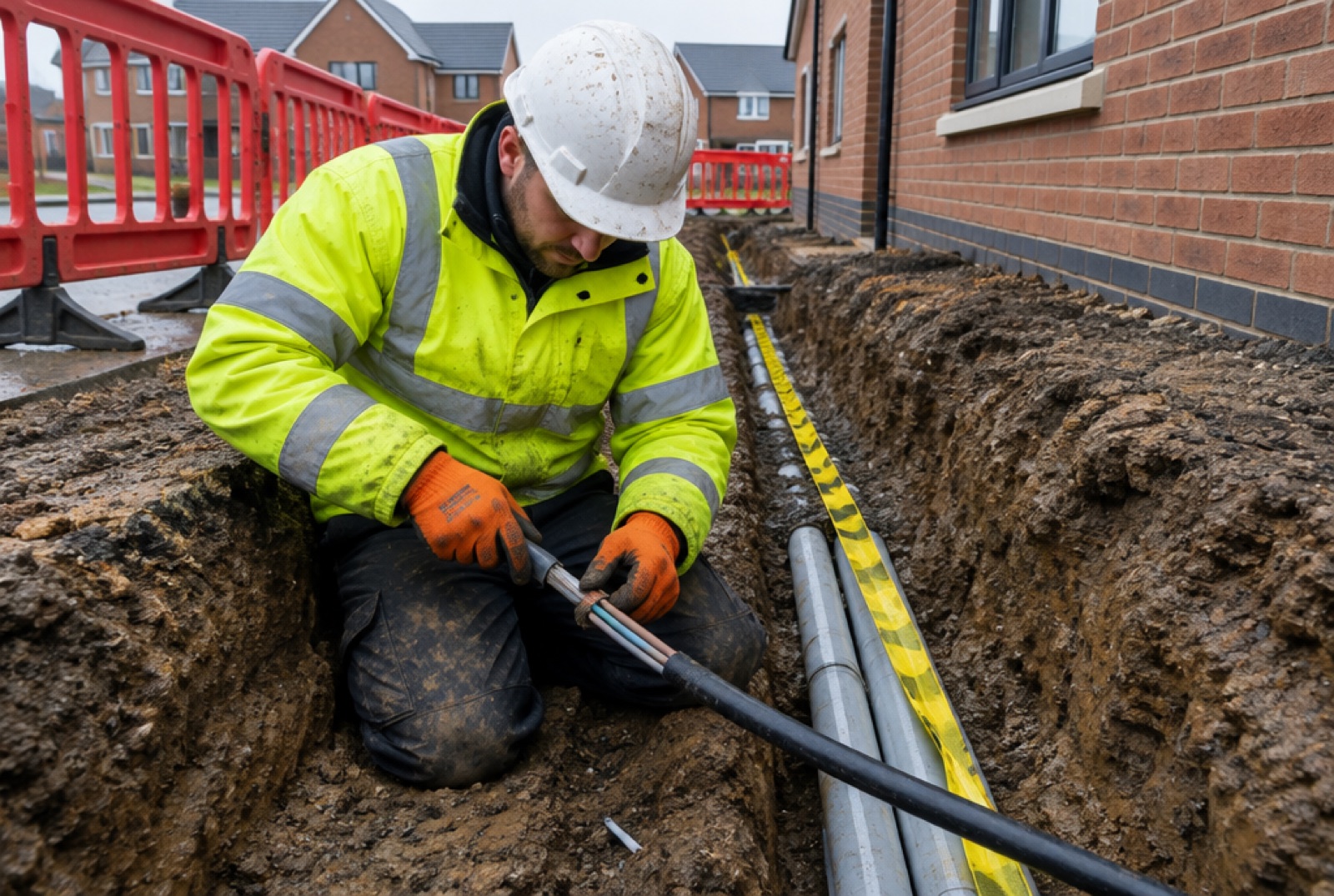
Meter positions moved to suit a new layout or tenant split.
Feeder pillars and services moved out of new car-park layouts.
Existing services re-routed to make room for chargers and switchrooms.
Overhead-to-underground conversions and service moves for new barns.
Striking a live cable is dangerous and expensive, and the records held by the network operator are not always complete. Before any excavation on a site with an uncertain history we obtain the utility records and carry out a cable location survey, marking up the route and depth so your groundworks contractor can dig safely.
Where the survey shows a cable in the way, the diversion can be designed and priced before the main works start rather than discovered by an excavator bucket.
Before a building can be demolished or stripped out, every incoming supply has to be permanently disconnected and proven dead. That means the network operator removing or making safe its service cable, the supplier closing the account and the meter being removed, all in the right order and on a date that suits your demolition contractor.
We coordinate the whole sequence: the disconnection application, the meter removal with your supplier, the network operator’s visit and written confirmation that the supply is isolated. If the site will need a new supply afterwards, we plan it at the same time so the new point of connection is ready when the build starts.
We obtain the records, locate the existing cables and confirm what can be contested.
We apply to the network operator and agree the method, outage and programme.
The new route is built and the old one disconnected, with reinstatement.
The ground is made good and the network operator’s records are updated.
Diversions are usually quicker than new connections, but the network operator’s outage planning sets the pace on live-cable work.
| Job | Typical programme | What drives it |
|---|---|---|
| Service alteration or meter move | 3 to 6 weeks | Supplier and meter operator appointments |
| Disconnection for demolition | 3 to 8 weeks | Network operator outage and supplier de-registration |
| Low-voltage mains diversion | 6 to 12 weeks | Route length, streetworks permits, outage planning |
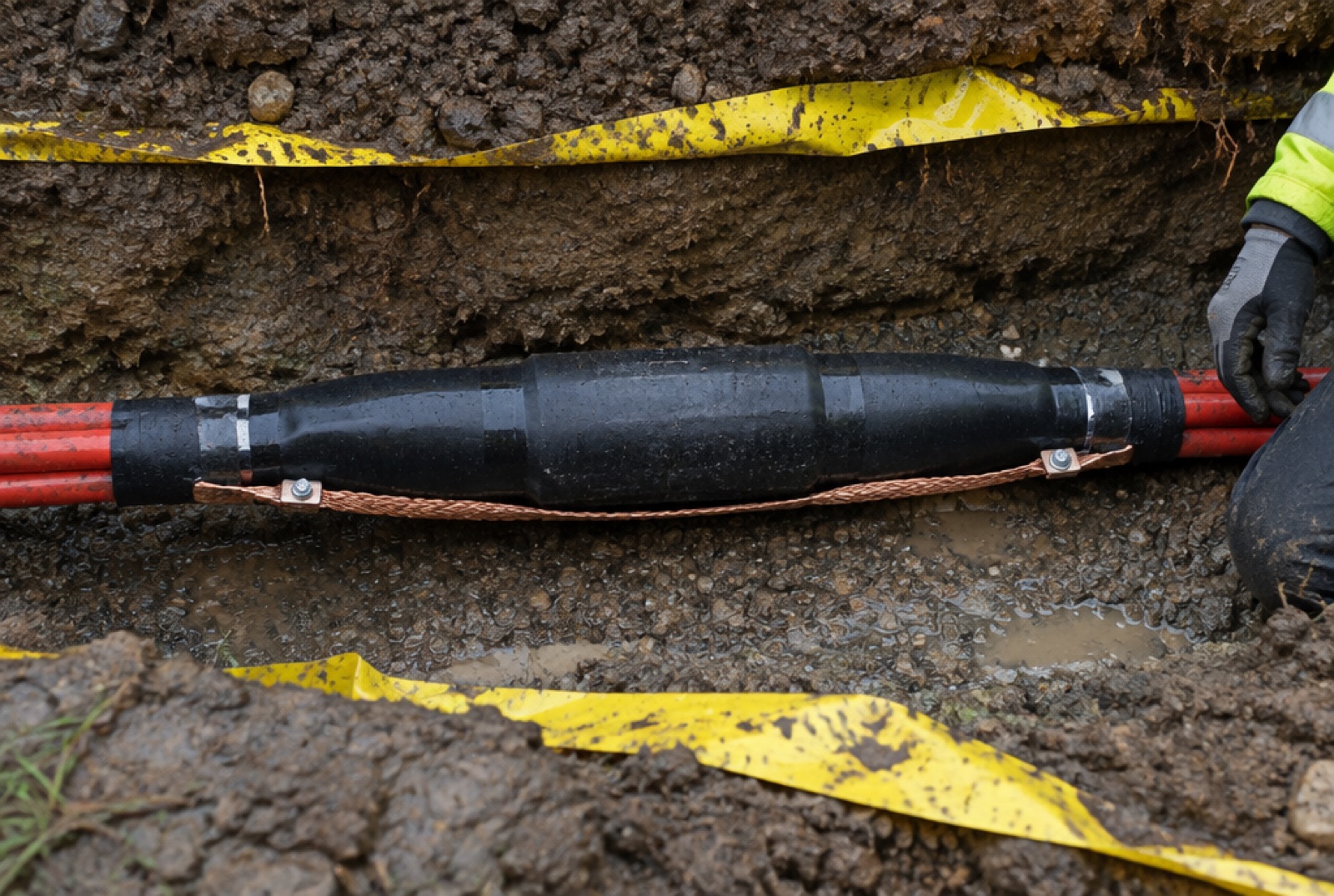
| 11kV cable diversion | 10 to 20 weeks | Design approval, switching programme and jointing |
| Cable location survey | 1 to 2 weeks | Records request and site visit |
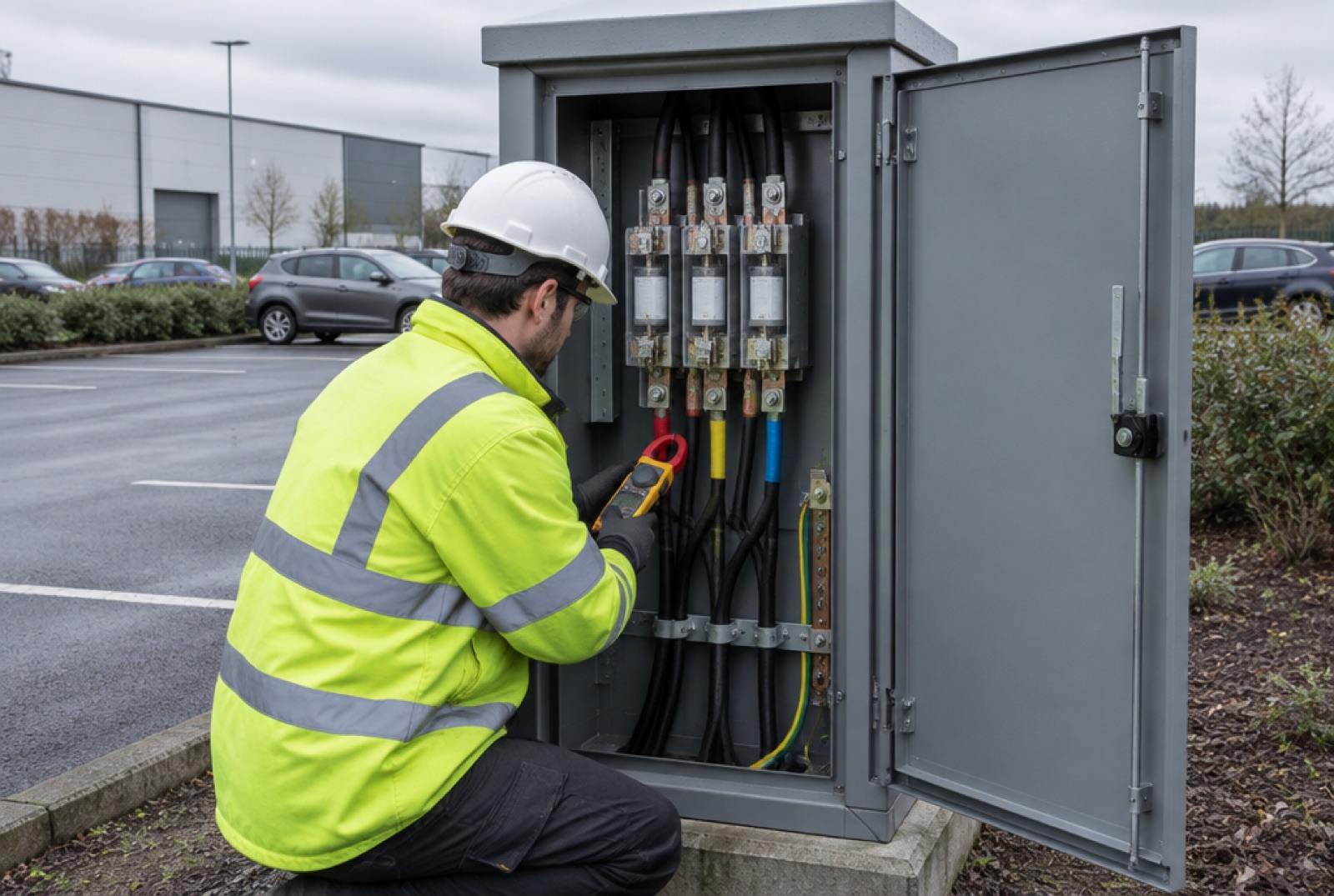
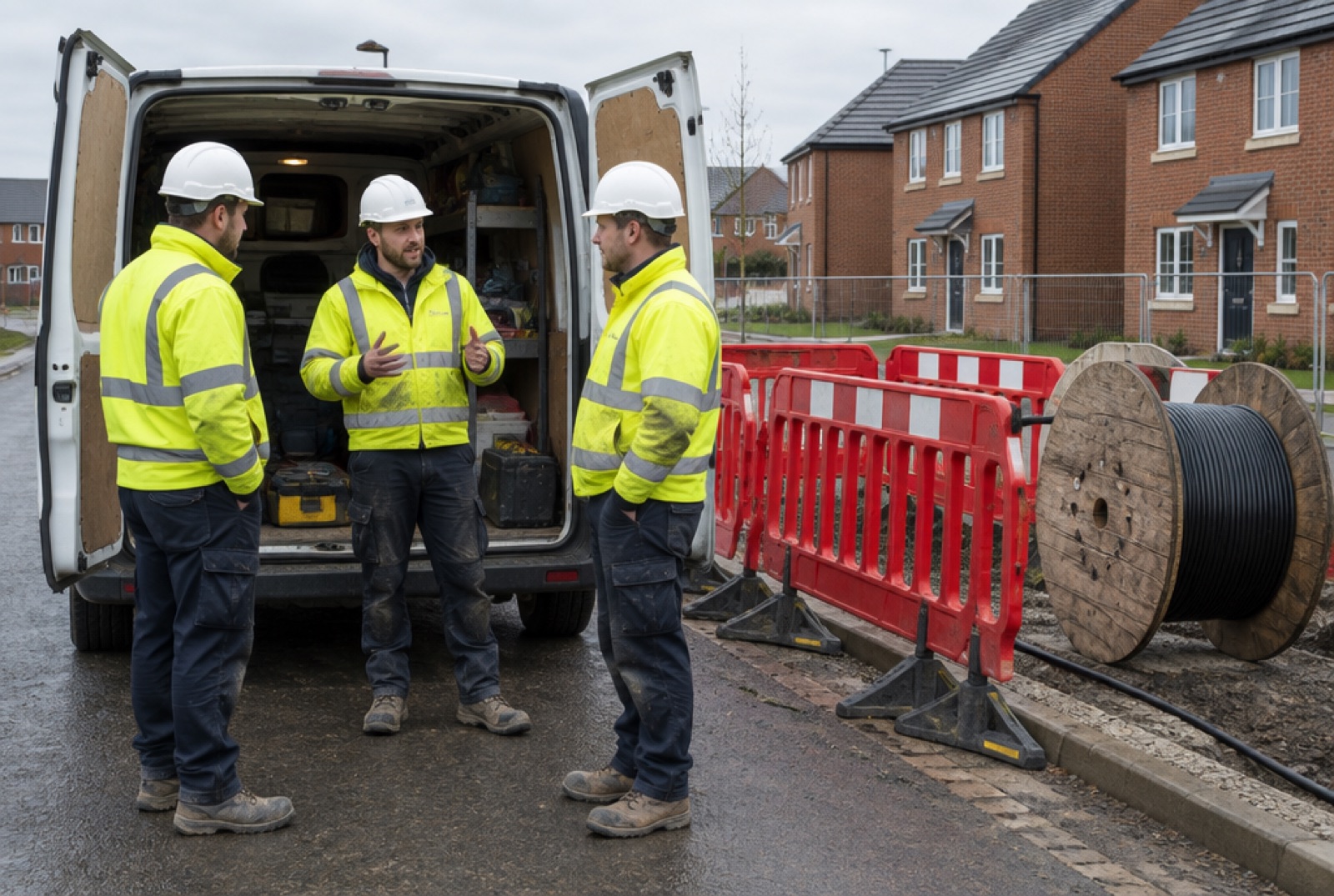
Stop digging and call us. We will get the records, locate the cable and tell you the quickest safe way round it.
The new route can usually be built by us as contestable work. The final connection into the network operator’s existing cable and the disconnection of the old one are often non-contestable and are done by the network operator, which we arrange. We confirm the split at the survey.
We can obtain the network operator’s records and carry out a cable location survey before you dig. This is worth doing on any site where the history is uncertain.
Yes. We arrange the disconnection, confirm the site is dead before demolition and provide the new supply for what follows.
Less than leaving it to the queue. We start the application as soon as the survey is done and plan the works around your dates.
Normally the party that needs the cable moved. The network operator charges for its non-contestable element and we charge a fixed price for ours, both set out in the quote.
Yes, where the line is on the low-voltage or 11kV network. We design the underground route and coordinate the removal of the overhead line with the network operator.
Your electricity supplier removes the meter and closes the account, and the network operator disconnects or removes the service cable. We coordinate both, in the right order, and confirm in writing when the site is safe for demolition.
Send us the site address and what is in the way, and we will arrange a survey.
Independent Connection Provider services · new electricity connections & three-phase supplies · substation installation & HV connections · EV charging grid connections · G99 applications & solar grid connections · housing development connections · our guide: what is an ICP?
We also install commercial solar PV, battery storage and EV chargers, and provide commercial electrical services across Poole, Bournemouth, Wimborne and the wider Dorset, Hampshire and Wiltshire area.
Leave your details and we’ll call you back — usually the same day.
★ 5.0 Google · NAPIT approved · Fully insured