
Low-voltage and high-voltage connections, substations, EV, solar and battery grid connections across Dorset, Hampshire and Wiltshire, from one accredited contractor.

When your site needs a new or bigger electricity supply, most people assume the only route is the regional network operator: SSEN across most of Dorset, Hampshire and Wiltshire, or National Grid Electricity Distribution further west. In fact, the design and construction of a new connection is open to competition. Any contractor accredited under the National Electricity Registration Scheme (NERS) can carry out that work, and the finished connection is adopted onto the network in exactly the same way.
Dorset Electrical Solutions is a NERS-accredited Independent Connection Provider. We design and build the connection, obtain the network operator’s point of connection and non-contestable quote on your behalf, manage the legals and wayleaves, and hand over a supply that is energised, metered and adopted.
Because we also install the EV chargers, solar PV and battery systems on the other side of the meter, one team can take a project from the first capacity check through to commissioning and ongoing maintenance.
Every service below is delivered as contestable work under our NERS accreditation, with the non-contestable elements arranged with the network operator on your behalf.

Three-phase and low-voltage supplies and upgrades for commercial, industrial and agricultural sites, including temporary builders’ supplies.
11kV connections with package or bespoke substations, transformers, switchgear, earthing and commissioning.
The grid connection and the chargers from one contractor, for fleets, forecourts, retail and workplace charging.
G99 applications, export capacity and point-of-connection works for commercial PV and battery storage.
Mains, plot services and substations for new-build sites, with adoption by the network operator or an IDNO.
Moving or removing cables and equipment that are in the way of your build, coordinated with the network operator.
Every new connection splits into two parts. The contestable works are the parts any accredited ICP can do: the connection design, trenching and ducting, cable laying, substation and transformer installation, jointing and, where the accreditation allows, the final connection to the network. The non-contestable works stay with the network operator: assessing the impact on its existing network, any reinforcement upstream, approving the point of connection and any work on its existing assets.
When you ask the network operator for a quote it will offer to do everything. When you appoint us, we price the contestable works, obtain the network operator’s non-contestable quote and manage both, so you have one contract, one programme and one person to call.
Three types of organisation are involved in new connections. Knowing who does what makes the quotes you receive much easier to compare.
| DNO | ICP (such as DES) | IDNO | |
|---|---|---|---|
| What it is | The licensed regional network operator | An accredited contractor that designs and builds new connections | A licensed operator that owns networks inside a DNO’s area |
| In the South | SSEN; National Grid Electricity Distribution further west | Dorset Electrical Solutions and other NERS-accredited contractors | Several national IDNOs adopt networks in the region |
| Owns the network? | Yes, the existing regional network | No, new assets are adopted on completion | Yes, the new networks it adopts |
| Builds new connections? | Yes | Yes, the contestable works | No, it adopts what an ICP builds |
| Maintains it afterwards? | Yes | Only private networks, under contract | Yes |
Competition in connections has been open to customers for years, yet most developers and business owners still assume the network operator is their only option.
Works are scheduled around your build dates rather than the network operator’s workload, and long-lead items are ordered early.
A defined scope and a fixed price for the contestable works, with the network operator’s charges shown separately so there are no surprises.
We handle the network operator, the civils, legals and wayleaves, and the MPAN and meter coordination.
The same team installs and maintains the chargers, solar PV or battery storage the connection is for.
A typical project follows six stages. We give you a named contact for all of them.
Send us the site plan, the load or export you need and your target dates. We reply within one working day.
We check the local network capacity, outline the connection options and give you a budget figure and programme.
We apply for the point of connection and the non-contestable quote, including G99 where you are generating.
Site survey, detailed design for network operator approval, legals and wayleaves, and a fixed price for the works.
Civils, ducting, cabling, substation and jointing, delivered to the agreed programme by our own teams.
Testing, commissioning and energisation, with the MPAN and meter arranged so the site goes live on the day. The assets are then adopted.
Every site is different, but these are realistic planning figures from enquiry to energisation. The biggest variables are the network operator’s response time, land agreements and equipment lead times, all of which we start early.
| Connection type | Typical programme | What drives it |
|---|---|---|
| Low-voltage supply or upgrade, no reinforcement | 8 to 14 weeks | Network operator point-of-connection offer, then civils and jointing |
| Low-voltage supply with new mains cable | 12 to 20 weeks | Route length, streetworks permits and reinstatement |
| 11kV connection with new substation | 20 to 30 weeks | Design approval, transformer and switchgear lead times, legals |
| Housing development, phased | Aligned to build programme | Mains before roads, plot services before second fix, substation before first occupation |
| Solar or battery export connection (G99) | 12 to 30 weeks | Export capacity available, network operator studies, witness testing |
| Diversion or disconnection | 4 to 12 weeks | What can be contested, network operator outage planning |
The kind of work our teams carry out, from trench to energisation.
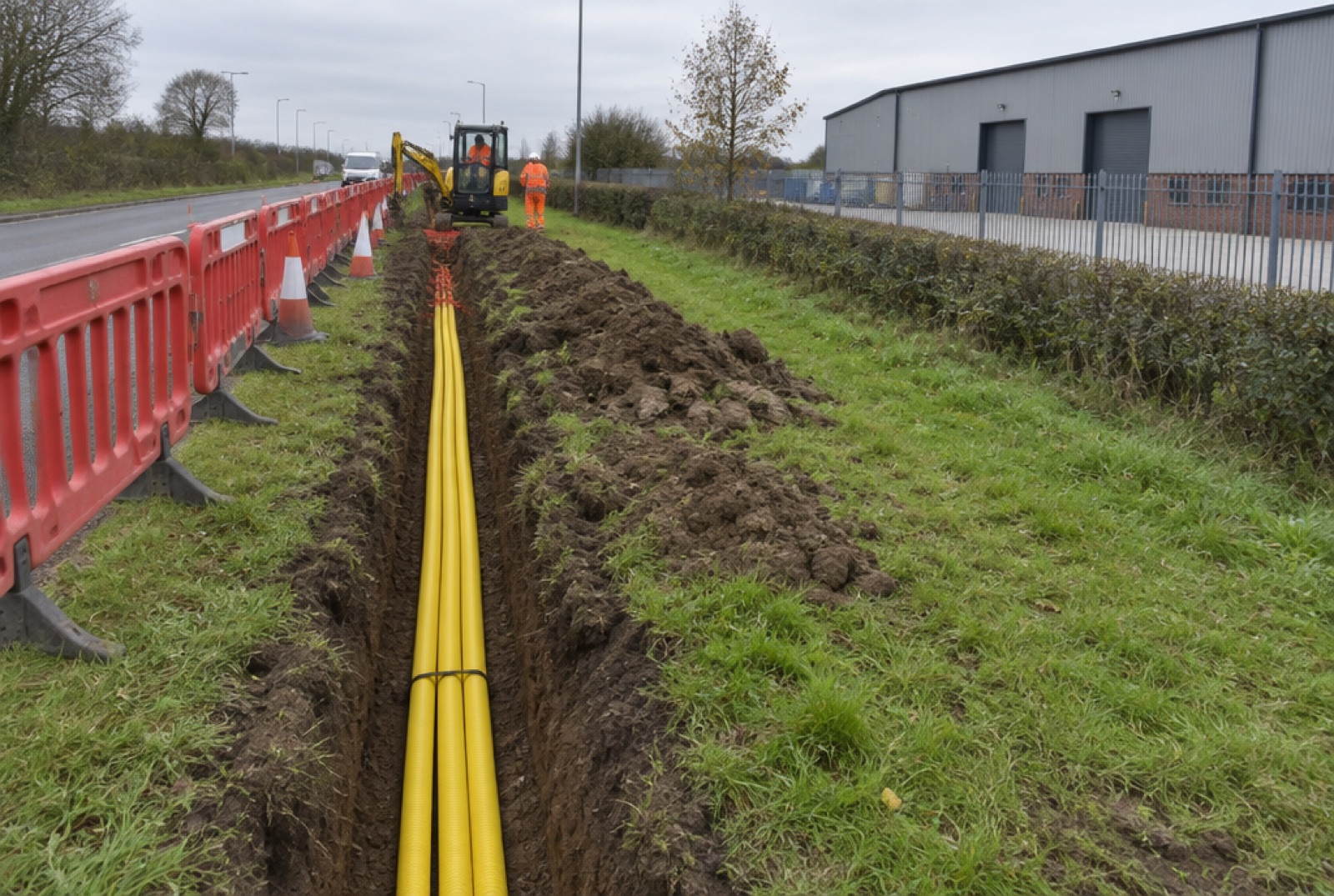
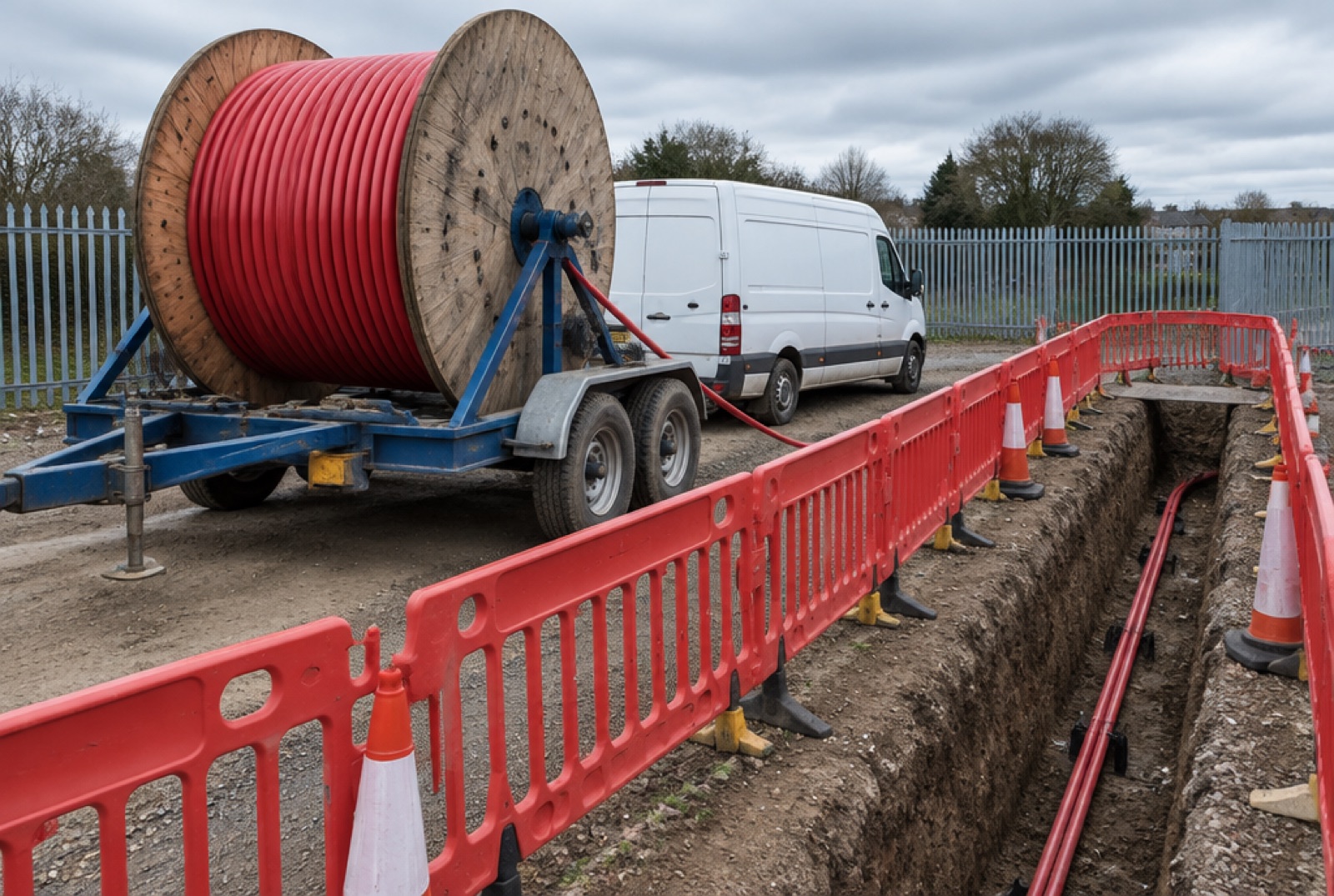
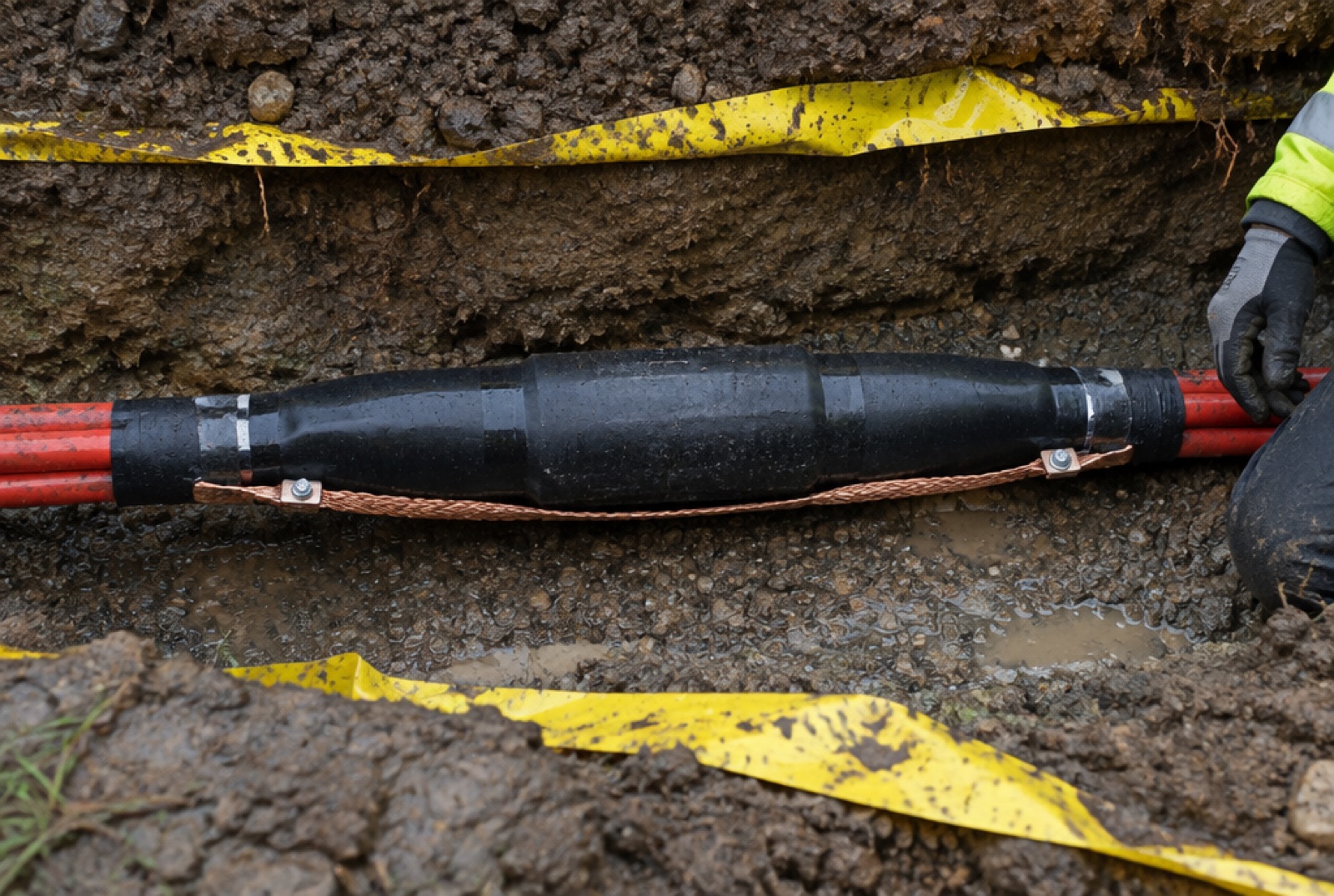
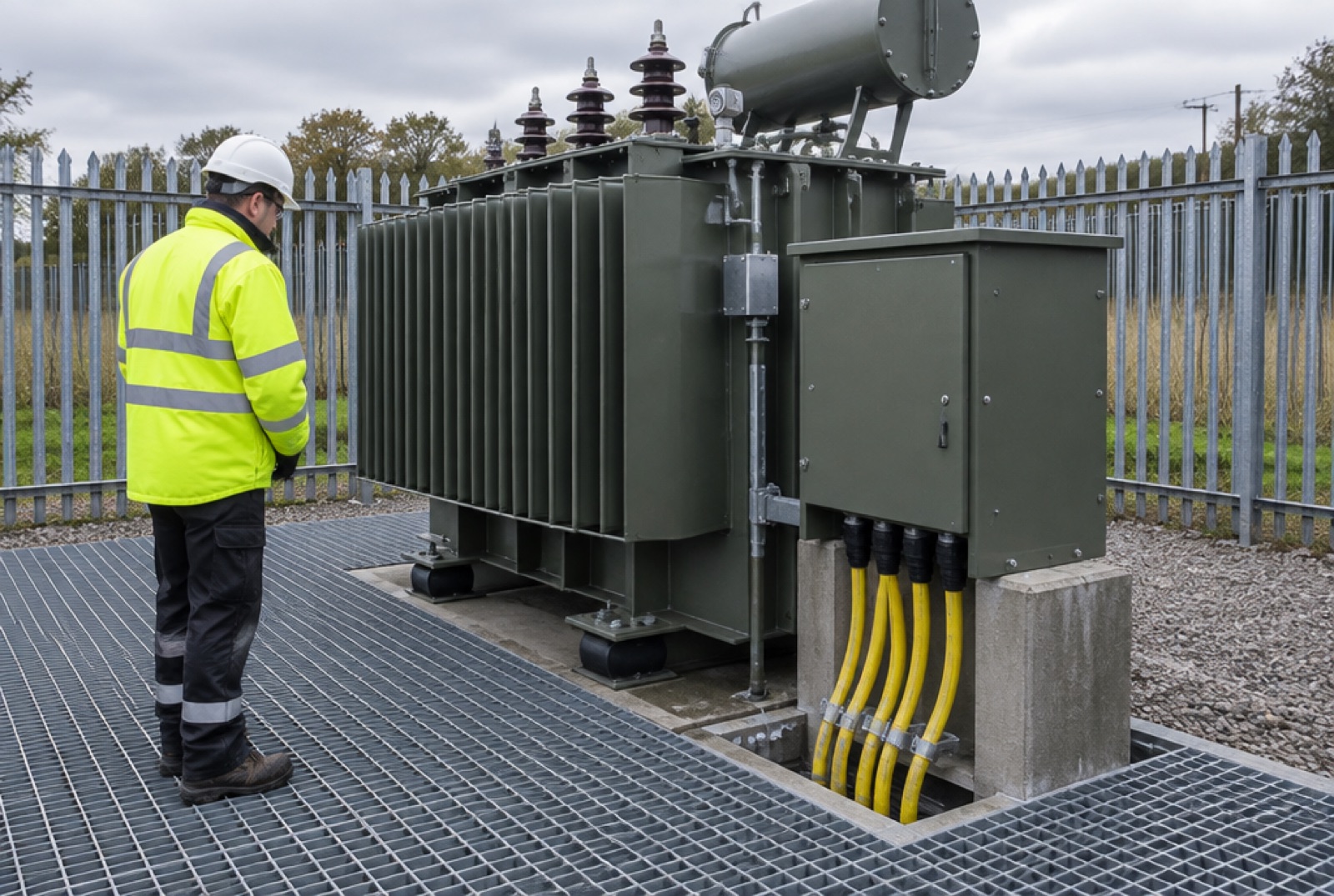
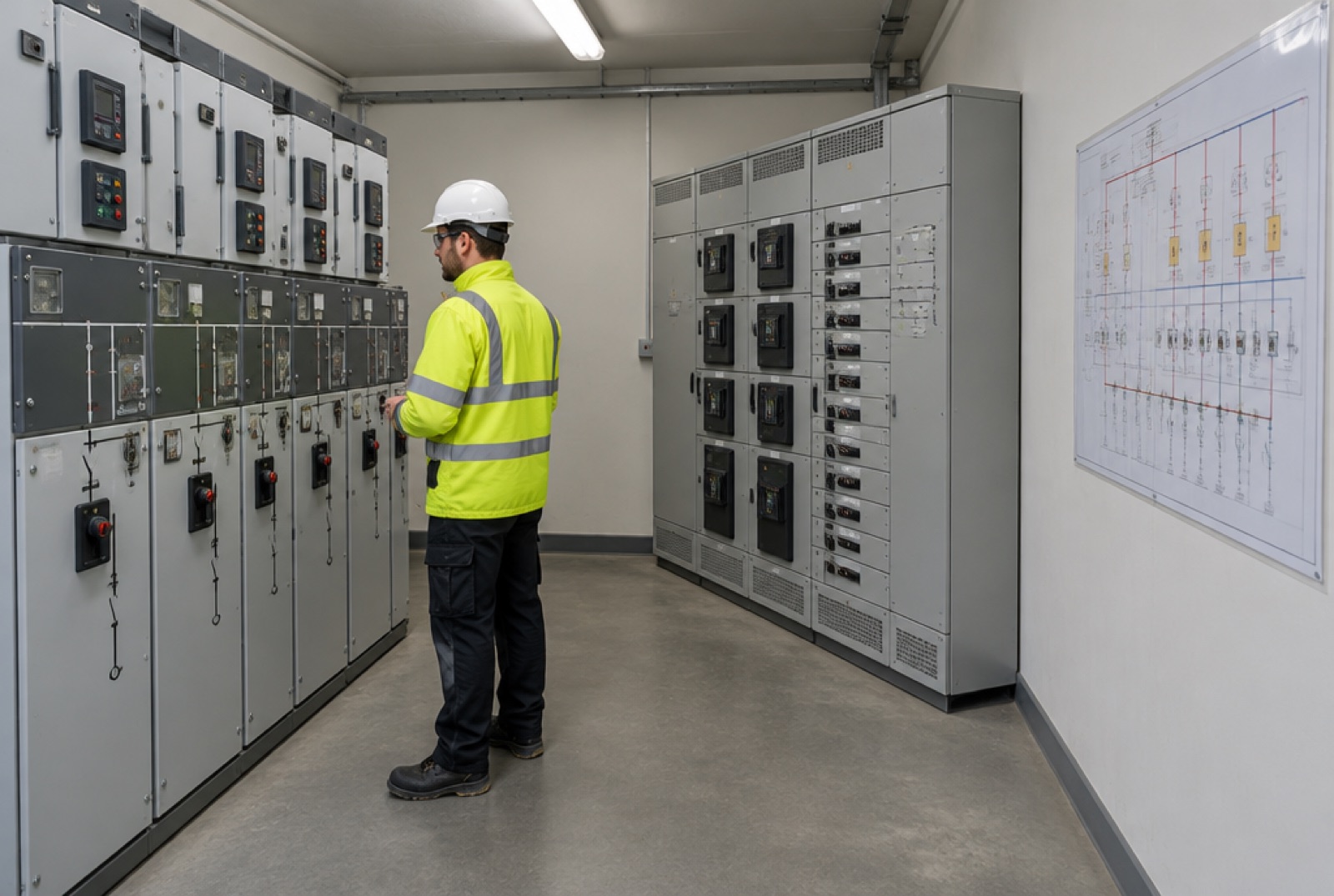
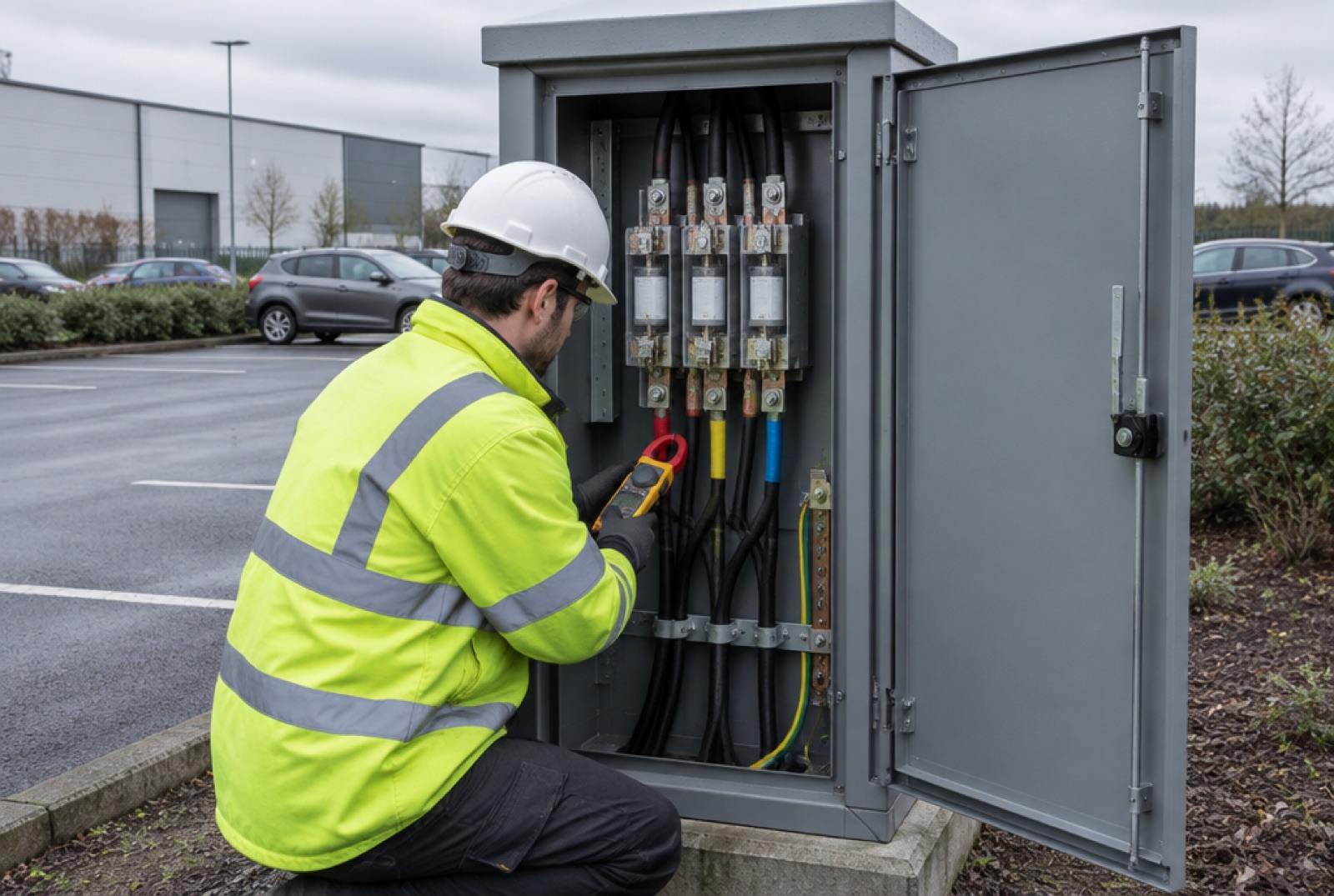
Dorset Electrical Solutions is registered under the National Electricity Registration Scheme (NERS), the accreditation the network operators require before an independent provider can design or build connections that will be adopted onto their network. Registration is assessed and audited by LRQA, and covers defined activities and voltage levels; we only take on work that sits inside our scope.
Every project is planned under CDM 2015 with site-specific risk assessments and method statements, and delivered by our own directly employed engineers. Alongside NERS we hold the accreditations you would expect from a full-service electrical contractor with more than twenty years in Dorset.
Our connection customers are the people who need power to arrive on a date: developers and housebuilders, main contractors and M&E contractors, fleet operators and forecourt owners, farmers and rural businesses, schools, care homes and healthcare estates, manufacturers and logistics operators, and the owners of solar and battery schemes.
Many of them come to us because the network operator’s programme did not fit theirs, or because they wanted one contractor to deliver the connection and the equipment behind it rather than managing two.
Send us the site details and we will tell you honestly whether using an ICP will save you time or money, or whether the network operator’s standard service is the better route.
No. The network operator must provide the point of connection and carry out any reinforcement of its existing network, but the design and construction of the new connection itself is contestable and can be carried out by an accredited ICP such as Dorset Electrical Solutions.
The DNO (Distribution Network Operator) owns and operates the regional electricity network; in Dorset and Hampshire that is SSEN, with National Grid Electricity Distribution to the west. An ICP (Independent Connection Provider) is an accredited contractor that designs and builds new connections. An IDNO (Independent Distribution Network Operator) is a licensed company that can own and operate the new network once it is built. We work with all three.
We can carry out the contestable works: the design, trenching and ducting, cable laying, substation installation and jointing. The network operator keeps the non-contestable works: assessing the impact on its existing network, any upstream reinforcement, approving the point of connection and work on its existing assets. We coordinate both so you only deal with us.
Once energised, the new assets are adopted by the network operator or an IDNO under an adoption agreement, and they maintain them in exactly the same way as any other connection. Where a customer chooses to keep ownership of a private HV network, we can provide an ongoing maintenance contract.
It depends on the size of the connection, the capacity available locally and how quickly the legals and wayleaves come together. Smaller low-voltage connections are typically measured in weeks; high-voltage connections with a new substation in months. See the timescales table above, and we give you a realistic programme at the feasibility stage.
There is no standard price: it depends on the capacity, the distance to the point of connection, whether a substation is needed and what the network operator charges for its non-contestable works. We give a budget figure at feasibility and a fixed price for our works once the design is approved. Asking us for a budget figure costs nothing.
We do, as part of the project. The meter itself is installed by your electricity supplier’s meter operator, so we register the MPAN and coordinate the supplier and meter operator so that the meter is fitted for energisation day.
As early as possible, ideally before planning or before you commit to a site. The available capacity and the route of the connection can change the layout of a scheme, and an early feasibility check is inexpensive compared with a redesign later.
Yes. If you have a network operator quote, send it to us. We can usually accept the non-contestable element and price the contestable works separately, or advise if the quote is best accepted as it stands.
Dorset, Hampshire and Wiltshire, including Poole, Bournemouth, Christchurch, Wimborne, Ferndown, Ringwood, Salisbury and Southampton, in both the SSEN and National Grid Electricity Distribution areas.
NERS (the National Electricity Registration Scheme) is the accreditation the network operators require before an independent contractor can design or build connections that will be adopted onto their networks. It is run by LRQA and covers specific activities and voltage levels, and any provider can be checked on the public NERS register.
Contestable works are the parts of a new connection that an accredited ICP can carry out instead of the network operator: design, trenching and ducting, cable laying, substation installation and jointing. Non-contestable works, such as reinforcing the existing network and approving the point of connection, stay with the network operator.
Send us the site details and we will come back with the options, the likely route and a budget figure.
new electricity connections & three-phase supplies · substation installation & HV connections · EV charging grid connections · G99 applications & solar grid connections · housing development connections · electricity disconnections & cable diversions · our guide: what is an ICP?
We also install commercial solar PV, battery storage and EV chargers, and provide commercial electrical services across Poole, Bournemouth, Wimborne and the wider Dorset, Hampshire and Wiltshire area.
Leave your details and we’ll call you back — usually the same day.
★ 5.0 Google · NAPIT approved · Fully insured